Imagine you’re getting ready for a big trip, but you’re standing in the airport, feeling lost. You’re not alone. Many travelers have felt this way, wondering what do you need to board a plane. You need the right airline ticket and valid ID for a smooth boarding process. This guide will help you know exactly what you need to fly without any last-minute surprises.
As you move through the busy airport and long lines, feeling prepared is key. Knowing what items you need and the airport rules can make your trip smoother. Whether you’re flying for the first time or often, having a list of what to bring will make your journey easier.
Key Takeaways
- Understand what do you need to board a plane, including valid identification.
- Learn the difference between an airline ticket and a boarding pass.
- Know the baggage allowances and how to pack efficiently.
- Prepare for airport security screening to avoid delays.
- Be aware of flight check-in options and their timing.
Introduction: Travel Tips for Stress-Free Boarding
Traveling by plane can feel overwhelming. But, with a few practical tips, you can make it easier. Knowing what you need for the plane is key to a good airport experience. Preparing early helps you move through the process smoothly, making your trip more enjoyable.
Begin by organizing your travel documents, like your ID and boarding pass. Check the baggage policies before you go to avoid surprises. Arriving early is crucial, giving you time for check-in and security checks. Knowing the airport layout also helps you move faster.
By focusing on these tips, you can reduce stress at the airport. With the right preparation and knowledge, boarding a plane becomes a smooth part of your trip.
What Do You Need to Board a Plane
Before you start your trip, it’s important to know what you need to board a plane. First, gather your travel documents like a government ID and your boarding pass. Without these, you might face delays that could ruin your plans.
Keep your flying essentials in order. Make sure your ticket is easy to find, whether it’s on your phone or in paper form. Also, check the airline’s rules for carry-on bags to avoid problems at the counter. This way, boarding will be easier and smoother.
Think about how you pack your carry-on items. Use the space wisely and follow the airline’s rules on what you can’t bring. By being organized, you’ll get to your gate without stress and on time.
| Essential Items | Purpose |
|---|---|
| Valid Identification | Required for verification at security and boarding. |
| Airline Ticket | Proof of purchase and travel itinerary. |
| Boarding Pass | Grants access to the airplane. |
| Carry-On Bag | Contains personal items and conveniences during the flight. |
Valid Identification: Key Requirements
Having valid identification is key when you’re ready to fly. Airlines and TSA rules say you must show an acceptable ID to get through security and onto the plane. You can use a current passport, a state driver’s license, or a government ID. Enhanced driver’s licenses also work, proving who you are and your citizenship.
Make sure the name on your ID matches your airline ticket. This helps avoid any travel problems.
Types of Acceptable ID
Here are the IDs you can use for flying:
- Current Passport
- State-Issued Driver’s License
- Government-Issued ID
- Enhanced Driver’s License
What to Do If You Lose Your ID
If you lose your ID, stay calm. TSA rules are flexible if you’re flying without ID. You can use other documents like a credit card, a membership card, or mail with your name and address to prove who you are.
Tell the TSA agents at the security check what happened. They’re there to help you verify your identity.
Airline Ticket and Boarding Pass Essentials
It’s key to know the difference between an airline ticket and a boarding pass for easy travel. A ticket confirms your booking and lists your flight details like your seat, itinerary, and ticket types. The boarding pass is given after check-in. It lets you get on the plane and shows your boarding time, gate, and flight info. Keep both your ticket and boarding pass handy during your trip.
Difference Between Tickets and Boarding Passes
These documents have different roles:
- Airline Ticket: Shows you booked a trip.
- Boarding Pass: Lets you get on the plane.
Obtaining Your Boarding Pass
You can get your boarding pass in a few ways.
- Check in online through your airline’s site or app.
- Use a self-service kiosk at the airport.
- Get help at the airline ticket counter.
Check-in usually starts 24 to 48 hours before your flight. Using a mobile boarding pass can make things smoother, letting you skip long lines. Just scan your mobile pass at security and the gate for easy access.

| Method | Advantages | Disadvantages |
|---|---|---|
| Online Check-In | Fast and easy; pick your seats | Needs internet |
| Self-Service Kiosk | Simple to use; cuts down on wait time | Limited help available |
| Ticket Counter Check-In | Personal help for complex trips | Expect longer waits |
Understanding Baggage Allowance
Getting ready for your flight means knowing about baggage allowance to dodge unexpected costs. Airlines have their own rules for checked and carry-on items. Knowing these rules makes your trip smoother.
Checked vs. Carry-On Baggage
Many airlines let you bring one carry-on and one personal item for free. But, checked baggage rules change a lot. Here’s a quick look at what’s usual:
| Airline | Checked Baggage Allowance | Carry-On Rules | Baggage Fees |
|---|---|---|---|
| American Airlines | 1 free bag for most domestic flights | 1 carry-on + 1 personal item | $30 for the first checked bag |
| Delta Airlines | 1 free bag for most domestic flights | 1 carry-on + 1 personal item | $30 for the first checked bag |
| Southwest Airlines | 2 free bags | 1 carry-on + 1 personal item | No checked baggage fees |
| United Airlines | $35 for the first checked bag | 1 carry-on + 1 personal item | $35 for the first checked bag |
How to Pack Efficiently
Packing smart is key to a good trip. Here are some tips:
- Roll your clothes to save space.
- Use packing cubes to stay organized.
- Put must-have items in your carry-on.
- Keep meds, snacks, and gadgets easy to reach.
Baggage Fees and Policies
Knowing about baggage fees can save you money. Airlines have different rules, so check them before you go. Look for deals or waivers if you fly often. Being informed helps cut down on baggage costs.
Airport Security Screening Process
Going through airport security can seem tough, but knowing the TSA screening process can make it easier. It’s key to be well-prepared for security checks. Knowing the TSA rules and following security guidelines can prevent delays.
Preparing for Security Checkpoints
To move quickly through airport security, follow these tips:
- Limit liquids to 3.4 ounces or less, all in a clear quart-sized bag.
- Take off shoes, belts, and jackets before the line.
- Have your boarding pass and ID ready for screening.
These steps can make TSA screening faster and improve your airport experience.
Common TSA Rules to Follow
Knowing TSA rules makes flying better. Don’t bring these items:
- Sharp objects like knives and scissors
- Firearms and ammunition
- Certain sporting gear like baseball bats and hockey sticks
Following these rules makes going through security easier and more confident.
| Prohibited Items | Allowed Items |
|---|---|
| Sharp weapons (knives, scissors) | Plastic or round-bladed utensils |
| Firearms | Unloaded firearms in checked baggage |
| Aerosol spray | Medication in liquid form (with documentation) |
| Sporting equipment (bats, clubs) | Lightweight sporting gear |
Knowing these rules reduces stress and keeps flying safe for everyone. Following these tips makes airport visits more enjoyable.
Flight Check-In Process: What You Need to Know
The flight check-in process is a key part of your travel journey. It helps you get ready and avoid delays. You have many ways to check in for your flight.
Options for Checking In
You have several ways to check in, each with its own benefits:
- Online check-in via the airline’s website or mobile app
- Using self-service kiosks at the airport
- Checking in directly at the airline counter
- Arranging check-in at the airport for those traveling with checked luggage
When to Check In
Knowing when to check in makes boarding smoother. Check-in opens 24 to 48 hours before your flight. Here are some tips for different flight types:
| Flight Type | Check-In Timeframe | When to Arrive for Check-In |
|---|---|---|
| Domestic Flights | 1 hour before departure | At least 1 hour before the scheduled departure |
| International Flights | 2-3 hours before departure | At least 2-3 hours before the scheduled departure |
Carry-On Luggage Rules and Regulations
Knowing the rules for carry-on luggage makes flying smoother. It’s key to understand what size and weight your carry-on can be. Each airline has its own rules, so check them before you fly.
Size and Weight Limits
Most airlines let you bring carry-ons up to 22 x 14 x 9 inches big, including handles and wheels. But, the weight limit can change, so always check with your airline. Following these size limits means you can easily bring your stuff on the plane.
What You Can and Can’t Bring
It’s important to know what you can’t bring in your carry-on. You can’t carry liquids over 3.4 ounces, sharp things, or big sports gear. Knowing what you can bring on a flight helps you avoid problems at security.
- Allowed Items:
- Essentials for personal care
- Snacks within the permitted limits
- Electronics like laptops and tablets
- Prohibited Items:
- Liquids exceeding 3.4 ounces
- Sharp objects such as knives and scissors
- Sporting equipment exceeding size limits
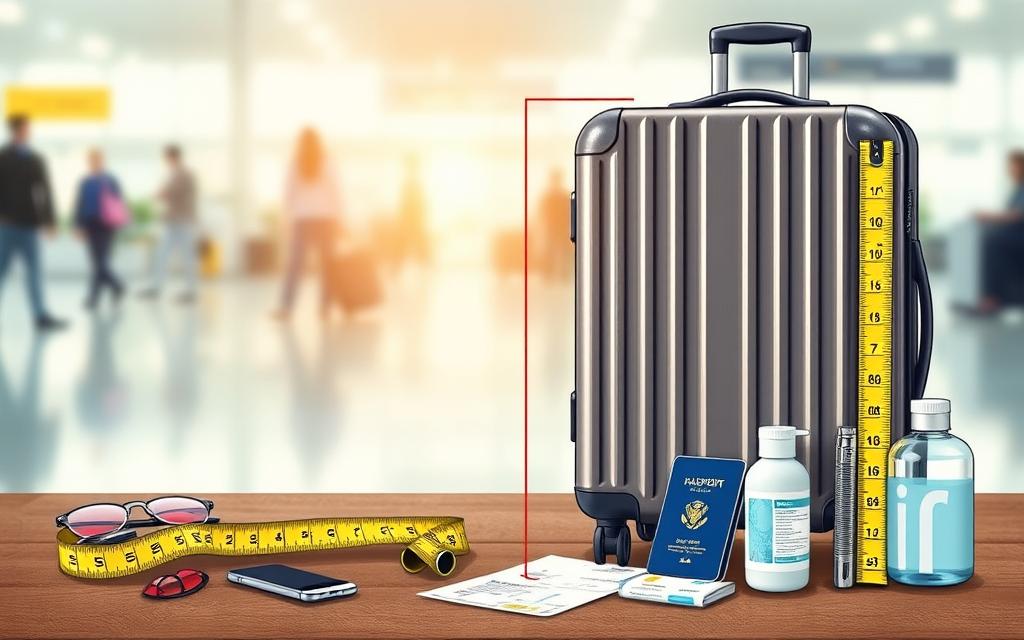
Always check your airline’s carry-on rules to make boarding easy and stress-free.
Arriving at the Airport: Timing is Everything
Planning when you arrive at the airport is key to a smooth trip. Knowing the best times to arrive can prevent delays and stress. By following airport tips, you can manage your time better and enjoy your journey more.
Recommended Arrival Times
For a smooth trip, stick to recommended arrival times. For domestic flights, arrive 1.5 to 2 hours early. For international flights, plan to be there at least 3 hours early. This gives you time for check-in, security, and unexpected delays.
| Flight Type | Recommended Arrival Time |
|---|---|
| Domestic Flight | 1.5 to 2 hours before departure |
| International Flight | At least 3 hours before departure |
Getting to Your Gate: Airport Terminal Navigation
When you enter the terminal, finding your gate is easier with some tips. Knowing how to navigate can save you time and reduce stress. It’s key to understand the airport’s layout for a smooth trip.
How to Find Your Gate
Start by looking at the flight information monitors around the airport. They show your airline, flight number, destination, and when to board. These monitors keep you updated and help you know where to go. If you’re lost, don’t worry, airport staff are there to help you find your gate.
Understanding Airport Signage
Signs at the airport can make navigating easier. Look for signs that point to gates, restrooms, places to eat, and more. Get to know the signs in the boarding area too. They give you important info as you move around. Paying attention to signs keeps you on the right path and makes your trip smoother.

Boarding Procedures: Know What to Expect
Learning about airplane boarding can make your trip better. Knowing how boarding works helps you prepare and reduces stress. Airlines use boarding groups to make boarding smoother. Knowing your group can improve your flight.
Boarding Groups Explained
Boarding groups decide who gets on the plane first. These groups are based on things like your ticket class, loyalty status, and if you’re traveling with family. Here’s a simple guide to common boarding groups:
| Boarding Group | Passenger Type | Typical Process |
|---|---|---|
| 1 | First Class and Business Class | Board first, offering priority access to the plane. |
| 2 | Elite Frequent Flyers | Follow first-class passengers, allowing a swift entry. |
| 3 | Passengers with Children | Allows families to settle in without rush. |
| 4 | General Economy | Board in groups based on seat rows (usually back to front). |
Boarding Etiquette and Tips
Good boarding manners are key for a smooth boarding process. Here are some tips to make flying better for you and others:
- Wait for your boarding group to be called before proceeding.
- Keep your belongings organized to avoid blockages in the aisle.
- Be patient, as rushing can lead to disarray and frustration for everyone.
- Respect personal space and avoid crowding while boarding.
During Your Flight: In-Flight Essentials
Planning for flying comfort starts long before you take off. Having the right items within easy reach can make your trip better. To make your flight more enjoyable, keep important things easy to get to.
What to Have Accessible During Your Flight
Make sure you have things that keep you entertained and comfy. Here’s a list of key items to pack in your carry-on:
- Phone and Charger: Stay connected and entertained during the flight.
- Headphones: Enjoy music or movies without bothering others.
- Reading Material: Books or e-readers are great for killing time.
- Snacks: Bring your favorite snacks to go with the in-flight meals.
- Medication: Keep your meds handy for easy access.
- Travel Pillow: Get better neck support for flying comfort.
- Blanket or Shawl: Stay warm if the cabin gets cold.
Preparation is crucial. Being mindful of your in-flight essentials can turn discomfort into a pleasant flight. Adjust your mindset and make sure you have everything you need for your trip. This can make a big difference.
| Item | Purpose |
|---|---|
| Phone | Stay connected and entertained |
| Headphones | Enjoy movies or music silently |
| Snacks | Satisfy hunger between meals |
| Travel Pillow | Support your neck for better comfort |
| Blanket | Keep warm during the flight |
Conclusion
Traveling can be tough, but getting ready right can change everything. This guide shows why being organized matters, from having the right ID to knowing how airport security works. By using the tips in this article, you can make your trip smoother.
When you start your next trip, keep these tips in mind: give yourself plenty of time for check-in and going through security. Be aware of the baggage limits and always have your papers ready. Getting ready for a flight doesn’t have to be hard; use these tips to make your trip better.
Whether you’re used to flying or it’s your first time, this guide will boost your confidence. With a clear plan for your trip, you’ll be ready for anything. This means your journey will start off well.