Imagine you’re gearing up for a weekend getaway, and you can’t bear the thought of leaving your furry friend behind. You’ve seen the adorable kitty on social media happily lounging in their carrier, and you wish for the same experience. Taking your cat along for the ride is indeed possible, but it requires a bit of planning and understanding of their comfort needs. With the right tips for traveling with a cat, you can smooth the way for you both, ensuring that your feline remains relaxed and feel secure throughout your journey. It’s all about establishing a routine, fostering a sense of safety, and preparing adequately before you set out. But what do you really need to know to make traveling with cats a delightful experience?
Key Takeaways
- Understanding your cat’s comfort needs is crucial for stress-free travel.
- Establishing a routine can help alleviate anxiety during the journey.
- Selecting the right cat travel carrier is essential for safety and comfort.
- Familiarizing your cat with their carrier beforehand can ease their nerves.
- Keep your travel supplies organized, including food, water, and cleaning items.
- Regular breaks during long car trips are important for your cat’s well-being.
Understanding Your Cat’s Comfort Needs
Traveling with a cat can be a daunting task, especially when considering their comfort needs. Cats thrive on routine, which makes maintaining a familiar schedule during traveling crucial. A well-structured environment helps reduce their anxiety and ensures a smoother journey.
Importance of Routine
Routine plays a significant role in helping your cat feel at ease. Keeping their feeding times and play schedules similar to what they experience at home can minimize stress. When embarking on a trip, utilize travel tips that focus on consistency and familiarity to help your furry friend adjust. Implementing a consistent routine may even require starting weeks in advance, gradually accustomed to being confined in a carrier or traveling in a vehicle.
Recognizing Signs of Anxiety
Being vigilant about your cat’s behavior during travel can help identify when they are feeling overwhelmed. Signs of anxiety include:
- Excessive meowing
- Hiding or seeking secluded spots
- Refusal to eat
Observing these behaviors allows you to act quickly. Consider using cat calming treats or natural relaxation aids like CBD oil and pheromone sprays. These tools can create a more comforting environment while on the go.
Offering your cat familiar items, such as favorite toys and blankets, can further enhance their comfort. Prepare your journey by integrating these components into your travel plans, thus making your cat feel safe and secure.
Choosing the Right Cat Carrier
Selecting the proper cat travel carrier plays a crucial role in ensuring a smooth and stress-free journey for you and your feline friend. The right carrier not only provides safety but also enhances your cat’s comfort, especially during travel. Multiple options exist, enabling pet owners to find a carrier that matches their cat’s personality and travel needs.
Types of Cat Carriers
Understanding the various types of cat carriers can help in selecting one that suits both you and your cat. Here are some options to consider:
- Soft-Sided Carriers: Lightweight and flexible, they provide comfort but may be harder to clean.
- Hard-Sided Carriers: Durable and easier to maintain, they are often recommended for various travels.
- Top-Loading Carriers: Ideal for anxious cats, allowing for quick and easy access.
- Cat Carrier Backpacks: Convenient for transporting your cat while being hands-free.
- Rolling Suitcase Style Carriers: Offer extra room and visibility but can be challenging to clean.
Ensuring a Comfortable Fit
When choosing a cat travel carrier, ensuring a comfortable fit is essential. Follow these guidelines to make sure your carrier meets your cat’s needs:
- Your cat should be able to stand, sit, and turn around comfortably within the carrier. Ideally, the carrier should be one and a half times the size of your cat.
- Consider using washable liners for added comfort and to keep your cat dry during any travel incidents.
- Familiarize your cat with the carrier before travel by leaving it in familiar locations and placing treats inside.
- Multiple access points can ease the stress of loading your cat in and out, especially during vet visits.
- Proper ventilation and visual shields can help reduce anxiety during transportation.
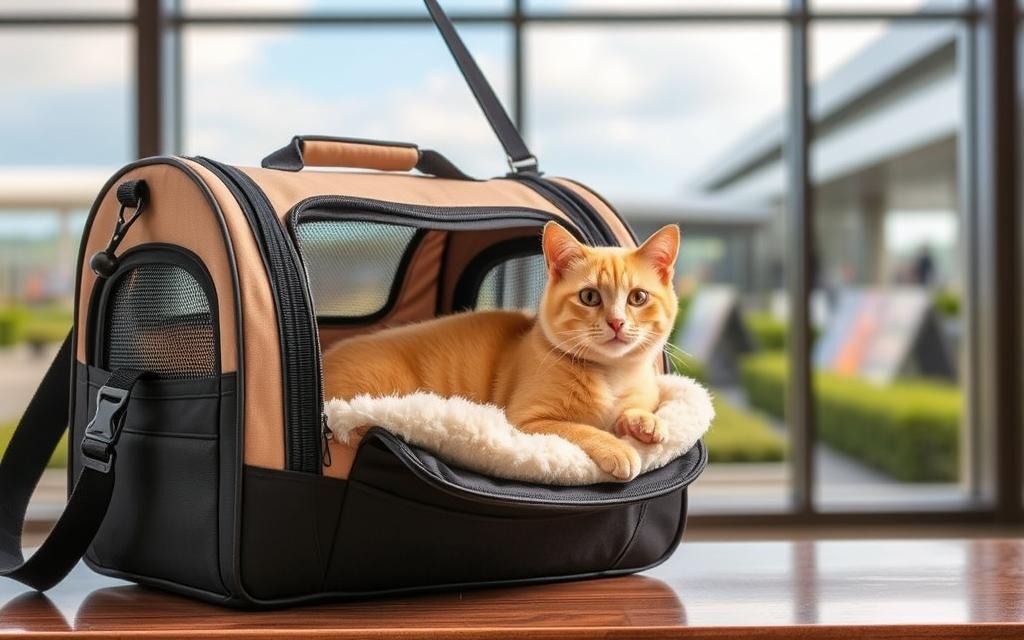
In some instances, you may need to administer cat travel medication for anxious cats. Being proactive about ensuring a peaceful environment will benefit both you and your pet during your travels.
| Carrier Type | Durability | Ease of Cleaning | Comfort Level |
|---|---|---|---|
| Soft-Sided | Moderate | Challenging | High |
| Hard-Sided | High | Easy | Moderate |
| Top-Loading | Moderate | Moderate | High |
| Backpacks | Moderate | Moderate | Moderate |
| Rolling Suitcase | Moderate | Challenging | High |
Essential Tips for Traveling with a Cat
Traveling with a cat can be a rewarding experience when you take the time to prepare. Following effective tips for traveling with a cat will help ensure a smooth journey for both you and your feline companion. Start by preparing your cat for travel well in advance.
Preparing Your Cat for Travel
Begin the preparation process by introducing your cat to their carrier several days or weeks before your trip. Use treats to encourage them to explore the carrier. Gradually simulate short trips in your vehicle to help them adjust to the sensation of movement. Remember, your cat’s comfort should be a priority, as they are naturally more territorial and may not be inclined towards travel.
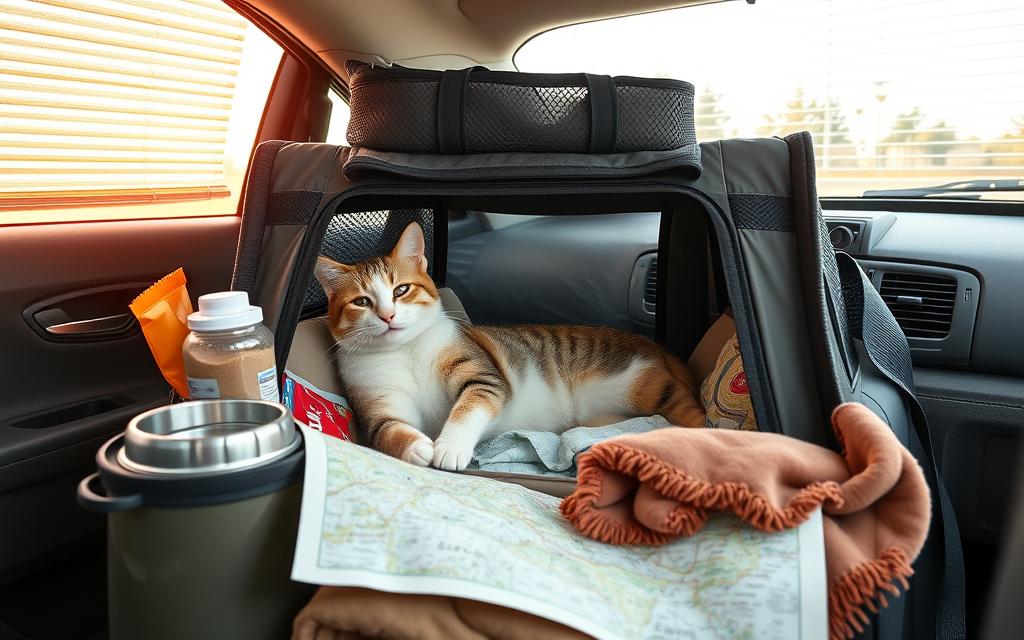
Familiarizing Your Cat with the Carrier
To make your cat feel secure while traveling, cover the carrier with a familiar blanket. This can reduce anxiety and provide a sense of security. Playing soothing music can also contribute to a calming atmosphere. Incorporating breaks during your journey is essential; cats may need to relieve themselves around four times a day. Take advantage of these breaks to let your cat stretch and become accustomed to their surroundings. Keep in mind, some cats may respond better to relaxation products or holistic solutions to ease anxiety rather than sedation.
| Tip | Description |
|---|---|
| Introduce Carrier Early | Start placing treats inside the carrier days or weeks before travel. |
| Short Trips | Simulate short car trips to help your cat adjust to moving. |
| Comfort Items | Cover the carrier with a favorite blanket to provide familiarity. |
| Frequent Breaks | Plan for multiple stops to let your cat relieve themselves and explore. |
| Relaxation Aids | Consider using natural products to ease travel-related anxiety. |
Implementing these tips for traveling with cats can turn what may seem like an overwhelming experience into a pleasurable adventure for both you and your feline friend. Make adjustments as necessary, and be patient as your cat acclimates to the travel routine.
Packing the Right Supplies
Properly packing supplies for your cat can significantly enhance their travel experience. Careful selection of items ensures that your feline companion remains comfortable and has everything they need during the journey.
Food and Water Dishes
Portable food and water dishes are crucial when traveling with your cat. Look for collapsible options that make transportation easy. Offering your cat regular meals and hydration can help maintain their usual routine, which is essential as they may otherwise lose their appetite due to stress.
Favorite Toys and Blankets
Your cat’s comfort can be improved with familiar items. Bringing along their favorite cat travel toys and a comforting blanket can provide a sense of familiarity. These familiar scents help ease anxiety and create a more secure environment during your travels.
Cat Travel Documents
When traveling, don’t forget to gather essential cat travel documents. This includes health certificates, vaccination records, and microchip registration information. Ensure your cat wears an ID tag with your contact details, especially if they are microchipped. This documentation is especially important for long-distance travel and ensures compliance with regulations at your destination.
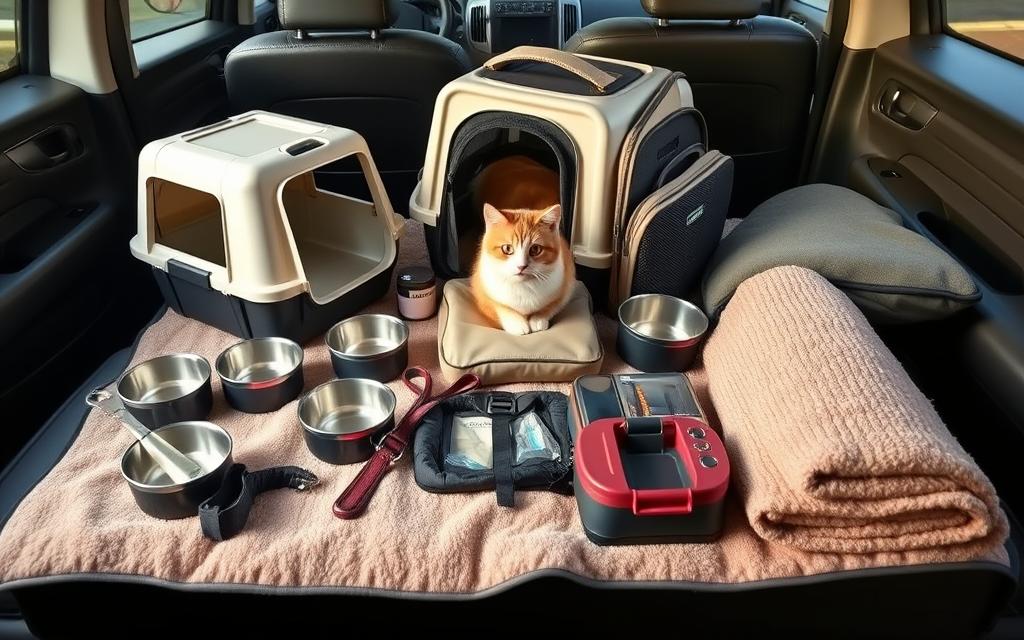
| Item | Purpose | Notes |
|---|---|---|
| Portable Food Dish | Feeding during travel | Choose collapsible for convenience |
| Water Dish | Hydration | Keep water fresh in a spill-proof container |
| Cat Travel Toys | Entertainment | Select lightweight options to pack easily |
| Blanket | Comfort | Bring a familiar blanket for reassurance |
| Portable Litter Box | Bathroom needs | Consider collapsible options for easy transport |
| Cat Travel Documents | Compliance | Include all health and identification records |
Traveling by Car with Your Cat
Embarking on a road trip with your feline companion requires careful planning and consideration. Many cat owners choose to travel by car, especially during summer months and holidays. Knowing how to ensure your cat’s comfort and safety makes the journey smoother for both you and your pet.
Securing the Carrier in the Vehicle
Using a cat carrier is essential for your cat’s safety while traveling. Secure the carrier with a seatbelt to provide stability during transit. Popular options like the Sleepypod Mobile Pet Bed have been crash-tested for additional security. Carefully introducing your cat to the carrier through short rides can help them acclimate to car travel. This patient approach ensures your cat grows comfortable, potentially leading to enjoyable trips in the future.
Making Frequent Stops
Long road trips can be taxing for your cat. Plan to make frequent stops so your feline can hydrate, stretch, and address any bathroom needs. Providing access to a travel litter box and maintaining litter consistency can ease this process. Be sure to never leave your cat unattended in the car since high temperatures can rise quickly, posing serious risks. Keeping a checklist of essentials to pack, which includes food, water, and a portable litter solution, is key to a successful journey.
Maintaining a Comfortable Environment
During your trip, create a comfortable environment for your cat. Control the temperature inside the vehicle and consider playing soft music to help ease any stress. Various strategies can help, such as using a cat safety harness while at rest stops, though allow your cat to roam freely within a secured area. Consulting your veterinarian about potential anxiety medications or calming aids might also be beneficial, especially if your cat tends to experience motion sickness. Following these tips for traveling with a cat can help create a more pleasant experience for everyone involved.
Traveling by Airplane
Taking your cat on an airplane can be a rewarding experience with the right preparation. Choosing an appropriate cat travel carrier is essential to ensure comfort during the flight. Most airlines permit cats to travel as carry-on items, but they do impose specific size restrictions for carriers. Often, the maximum dimensions for a soft-sided carrier are approximately 17.5 x 12 x 7.5 inches. It’s wise to familiarize your cat with the carrier prior to travel to alleviate anxiety.
Choosing the Right Carrier for Flights
Selecting the right cat travel carrier can make all the difference during your journey. Aim for a carrier designed for airline regulations; some well-reviewed options include:
- Sleepypod Air – Airline-approved with great ventilation
- Petmate Sky Kennel – Sturdy design for larger cats
- Sherpa Travel Original – Soft-sided and easy to carry
Before purchasing a carrier, check the specific regulations of the airline you will be flying with, as rules can differ significantly among carriers regarding the number of pets allowed and required certifications.
Preparing for TSA Security Screening
At TSA security checkpoints, you may be asked to remove your cat from the carrier. Having a harness ready for your cat enhances security and comfort during this process. Make sure to allow extra time for screening and for bathroom breaks. Many cat owners find that using calming aids, such as treats or medications, helps to keep their cats relaxed. Options like Feliway products or Bach’s Rescue Remedy offer stress relief for travel.
When flying with your cat, it’s crucial to consult your veterinarian. They can provide tailored advice about cat travel medication and ensure that your feline friend is fit for flying. Health certificates may be required by your airline, typically needing to be obtained within ten days prior to departure. Investing time in preparation not only ensures compliance with airline requirements but also contributes to a smoother flying experience for both you and your cat.
Cat Safety During Travel
Your cat’s safety during travel cannot be overstated. Secure your furry friend with a cat safety harness when outside the vehicle or in unfamiliar environments. A harness prevents them from bolting or escaping, ensuring their safety in potentially chaotic situations.
Securing Your Cat with a Safety Harness
A cat safety harness is essential for keeping your cat secure during stops or explorations. When used correctly, it can protect your pet from sudden escapes. This piece of equipment allows you to take your time while your cat explores while reducing the anxiety of potential hazards.
Preventing Motion Sickness
If your cat experiences motion sickness, consult your veterinarian about cat travel medication. Options may include anti-nausea medications or calming aids, which can help keep your feline friend comfortable during travel. Consider alternatives like flower essences, CBD oil, or pheromone sprays to reduce anxiety without sedation. Through prepared practices and thoughtful choices, you can improve your cat’s travel experience.
Finding Cat-Friendly Accommodations
Securing suitable cat-friendly accommodations is essential for a smooth travel experience. Knowing which hotels welcome feline companions is vital. Not all “pet-friendly” establishments include cats in their policies, leaving many cat owners in a tricky situation. Researching various lodging options ahead of time helps avoid disappointment upon arrival.
Researching Pet Policies in Hotels
Before you book, it’s critical to investigate each hotel’s pet policies. Many hotels might only accommodate dogs, while a limit of two pets is common. Various establishments impose additional fees for pets. Budgeting for these expenses ensures you won’t face surprises upon arrival. Reading reviews from fellow pet owners provides insights into how well-suited a hotel is for cats.
Setting Up a Comfortable Space
Once you’ve secured cat-friendly accommodations, creating a cozy environment can significantly impact your cat’s comfort. Bring their bed, familiar toys, and a cat travel litter box to help them adjust. Setting the litter box in the bathroom usually works best due to easier cleanup. Gradually introducing your cat to their surroundings can also ease anxiety.
Consider leaving a “Do Not Disturb” sign on your hotel door. Notify the staff about your cat’s presence to prevent unnecessary disruptions. Ensuring a safe area means checking for potential hazards like wires and breakables. This preparation allows your cat to thrive in new environments, making your travel experience enjoyable.
| Hotel Chain | Pet Policy | Fees | Pet Limit |
|---|---|---|---|
| Kimpton Hotels | All pets welcome | No extra fees | None |
| Motel 6 | Cats allowed | Varies | Up to 2 pets |
| La Quinta | Pet friendly | Varies | Up to 2 pets |
| Best Western | Pets allowed | Varies | Up to 2 pets |
Consulting Your Veterinarian
Before embarking on your journey, take the time to consult with your veterinarian. Addressing any potential health concerns is crucial, particularly if your cat has existing medical issues or if they haven’t had their rabies vaccine updated, as many states require this by law. Your vet can help you assess whether your cat may need any specific cat travel medication to ensure a safe and comfortable experience during your travels.
Addressing Health Concerns
It is essential to discuss any health issues that could affect your cat while traveling. Conditions such as age-related factors, injury, or chronic illnesses should be considered when planning your trip. Your veterinarian may recommend travel medications or treatments to manage anxiety, ensuring your furry friend feels more at ease. This can help you better implement tips for traveling with a cat, enhancing their overall well-being on the road or in the air.
Discussing Anxious Behavior
Pay attention to your cat’s behavior during travel. If your cat shows signs of anxiety, such as excessive vocalization or restlessness, share these observations with your vet. They can provide you with tailored advice that could include behavioral strategies or medication if necessary. A proactive approach to managing anxious behavior will lead to a smoother journey and a more enjoyable experience for both you and your pet.