As you stand beneath the breathtaking arches of Marrakech’s Koutoubia Mosque, a feeling of wonder envelops you. Each whiff of spiced tagine wafts invitingly from nearby stalls, beckoning you to indulge in Morocco’s culinary delights. You quickly realize that traveling to Morocco is not merely about seeing stunning landscapes or historic landmarks; it’s about immersing yourself in a kaleidoscope of culture, tradition, and flavors.
Before you pack your bags for your Morocco vacation, understanding essential Morocco travel tips can make a world of difference in your experience. This comprehensive Morocco travel guide is designed to equip you with vital insights to ensure your adventure is enriching and memorable.
Key Takeaways
- Morocco offers a rich blend of cultural influences from Africa, Europe, and the Middle East.
- Planning your itinerary thoughtfully can enhance your enjoyment of Morocco tourism.
- Understanding local customs and etiquette is crucial for a respectful visit.
- Weather variations across regions can impact your travel experience, so choose wisely when to go.
- Staying flexible in your plans allows for spontaneous adventures.
- Exploring both urban hubs and natural wonders creates a comprehensive Moroccan experience.
Understanding Moroccan Culture
Moroccan culture is a mix of many traditions from over the years. When you visit Morocco, you’ll see how important customs are to people’s lives. Hospitality is a big part of this culture. Moroccans are very welcoming, offering warm greetings in homes and riads. They often start with tea ceremonies, showing their kindness and community spirit.
Importance of Hospitality in Morocco
Hospitality is key in Moroccan culture. Guests are treated with great respect and given mint tea as a welcome. This act of kindness is more than just being polite. It shows a deep respect for sharing time with others.
Learning about social rules and customs makes your visit better. It helps you connect with locals in a deeper way. This makes your trip more meaningful and fun.
Dress Code Essentials
Modesty is important in Moroccan dress code. Wearing modest clothes is respectful and keeps you out of trouble, especially for women. Loose clothes are best, especially in rural places and at religious sites.
Following these dress rules shows respect for the culture. It also makes your visit better. Plus, exploring Moroccan markets can let you enjoy their colorful clothes.
Choosing the Best Time to Visit Morocco
Planning your trip to Morocco is key for a great experience. The climate changes a lot across the country, affecting your travel plans. Knowing the best time to go lets you enjoy Morocco’s varied landscapes and culture.
Weather Variations Across Regions
Morocco has different climates, from the coast to the desert. For example, cities like Casablanca and Essaouira have mild winters. The Sahara has big temperature swings. Spring and fall are best for exploring, especially the Atlas Mountains.
This knowledge helps make a good travel plan for Morocco.
Peak Tourist Seasons and Their Impact
Knowing when tourists come can change your trip. Spring and summer are busy, with more people and higher prices. If you want a peaceful trip with lower costs, go in the shoulder seasons.

| Season | Best Regions to Visit | Average Temperature | Tourist Crowds |
|---|---|---|---|
| Winter | Coastal Cities | 50°F – 65°F | Low |
| Spring | Atlas Mountains, Marrakech | 60°F – 75°F | Medium |
| Summer | Sahara Desert, Coastal Cities | 80°F – 100°F | High |
| Fall | Fes, Chefchaouen | 55°F – 70°F | Medium |
Morocco Travel Tips for Planning Your Itinerary
Planning your trip to Morocco means picking out key places that show off the country’s culture and beauty. Think about visiting places like Marrakech’s lively markets, the old medina in Fes, and the blue city of Chefchaouen. These spots will give you memories to last a lifetime.
Must-see Destinations
- Marrakech: Famous for its bustling markets and vibrant nightlife.
- Fes: Renowned for its ancient medina and artisan workshops.
- Chefchaouen: Known for its striking blue buildings and serene atmosphere.
Time Allocation for Each City
Make sure you spend enough time in each city to really get into the vibe. For instance:
| City | Recommended Nights | Highlights |
|---|---|---|
| Marrakech | 3 | Souk shopping, visit the Jardin Majorelle |
| Fes | 2 | Explore the medina, visit local tanneries |
| Chefchaouen | 2 | Stroll through blue streets, hike in the Rif Mountains |
Traveling between cities can take longer than you think because of the hills and the different infrastructure. Keep this in mind when planning your trip to make your journey smoother.

Essential Morocco Travel Tips
Getting ready for Morocco means being flexible. It’s key to have a plan, but also be open to new things. This way, you can enjoy the trip more and handle surprises.
Staying Flexible with Your Plans
Being flexible lets you grab unexpected chances for fun. You might find a hidden market or get tips from a local. Remember, being open can make your trip unforgettable.
- Maintain an open schedule for unexpected adventures.
- Connect with locals for recommendations on hidden gems.
- Be willing to change your plans based on new interests or conditions.
Dealing with Transportation Challenges
Traveling in Morocco can be tricky, especially for first-timers. Buses are cheap, but many prefer private drivers or group tours. These options make getting around easier and let you see more of the country.
- Private driver services for convenience and comfort.
- Group tours for guided experiences through popular attractions.
- Rental cars for independent exploration, if you’re comfortable driving.
Accommodation Options in Morocco
Choosing the right place to stay in Morocco can make your trip better. You can pick from luxury hotels to traditional riads. Each offers a unique view of Moroccan hospitality. This helps you decide based on what you like and how much you can spend.
Understanding Riads vs. Hotels
Riads are traditional Moroccan homes with beautiful architecture and courtyards. They offer a close look at local culture. This makes them a top pick for travelers wanting a real Moroccan experience. Hotels, on the other hand, have more amenities and services for those who like a standard experience.
Booking Strategies for Affordable Stays
For a budget-friendly stay, try Hostelworld and Airbnb. They often have good prices and flexible cancellation rules. Booking early is smart, especially in busy seasons, to get the best deals. Also, watch for last-minute discounts for big savings.
| Feature | Riads | Hotels |
|---|---|---|
| Amenities | Personalized service, cozy atmosphere | Standardized amenities, larger facilities |
| Cost | Often affordable | Varies widely; can be pricier |
| Cultural Experience | Authentic Moroccan style and architecture | More modern and international environments |
| Ideal For | Travelers seeking immersion in local culture | Tourists preferring familiarity and convenience |
Exploring Morocco’s Vibrant Cities
Morocco’s cities are full of history, culture, and excitement. They offer a mix of sights and experiences that show what morocco tourism is all about. Marrakech and Chefchaouen are two cities that stand out, each with its own unique adventures for travelers.
Visiting Marrakech: What to Expect
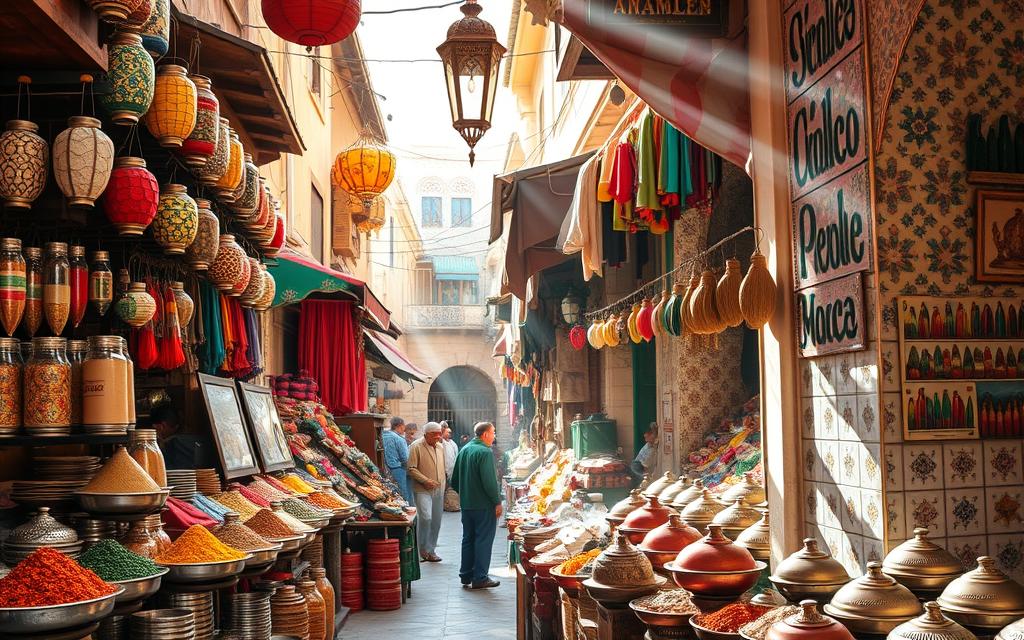
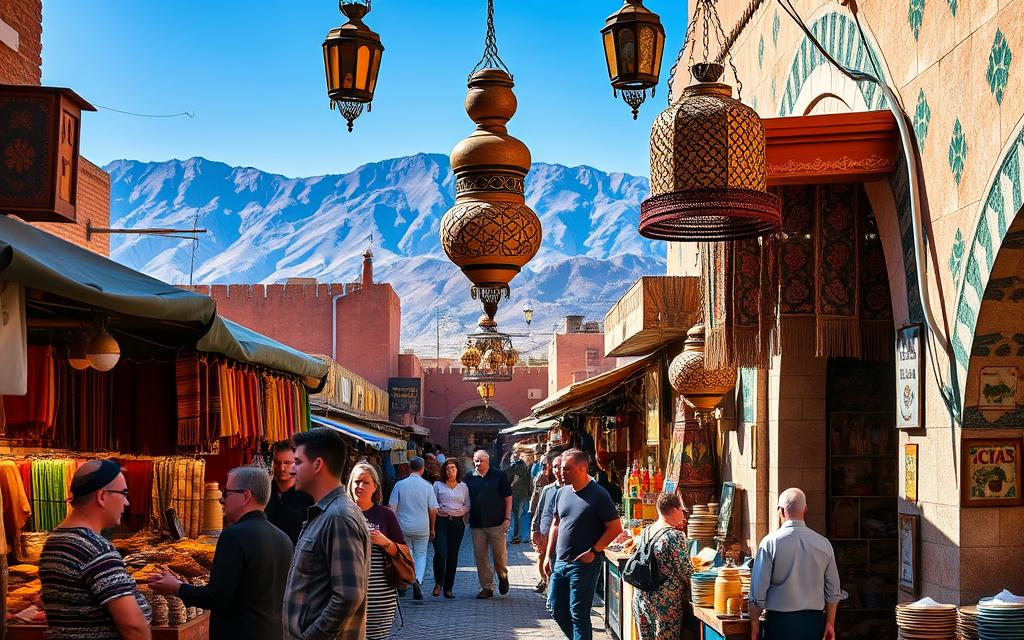
Marrakech is a lively city full of energy. The famous Jemaa el-Fnaa square is a must-see, with its street performers and food stalls. You’ll find historic palaces and narrow streets to explore, and the souks are full of crafts and local goods.
Be ready for a feast for your senses. You’ll experience the sights, sounds, and tastes that make morocco special.
Discovering the Blue City: Chefchaouen
Chefchaouen, or the blue city, is a peaceful place compared to Marrakech. Its streets are lined with blue, making it perfect for photos. It’s a great spot for relaxing after the hustle of the big cities.
The blue city draws in visitors with its calm beauty. It shows the variety of experiences morocco tourism offers.
Food Culture and Dining in Morocco
Exploring Morocco’s food scene deepens your travel experience. It connects you to the heart of moroccan culture. The variety of dishes tells the story of the country’s history and regional tastes. Each meal opens a door to local traditions and flavors.
Must-try Moroccan Dishes
Make sure to try these iconic dishes during your visit:
- Tagine: A slow-cooked stew made in a traditional pot. It has meats, vegetables, and spices.
- Couscous: Fluffy semolina grains served with a rich stew on top. It’s a key dish in Moroccan meals.
- Pastilla: A savory pie with layers of pastry. It’s filled with pigeon or chicken, almonds, and sweet spices.
- Street Food: Visit local markets for tasty street food like grilled meats, pastries, and chickpea salads.
Dining Etiquette and Local Customs
Knowing how to dine like a local makes your experience better. In Morocco, sharing meals is a sign of hospitality. Here are some customs to remember:
- Use your right hand to eat, as it’s seen as more polite.
- Meals are often shared, which brings people closer together.
- During Ramadan, eating times change. People gather for iftar after the sun sets.
Transportation Tips for Traveling Around Morocco
Traveling around Morocco can be an exciting adventure. You’ll find many ways to get around the country. This part of your guide will show you the best options for traveling within Morocco. You can choose from public transport, rentals, or taxis.
Opting for Public Transportation or Rentals
Public transport in Morocco is easy to find and won’t break the bank. Trains link big cities, and buses cover smaller towns and rural spots. But, remember, these services don’t always run on time like they do in the West.
Renting a car is another good choice. It lets you see places at your own speed. Just be ready for a unique driving scene. Local drivers have their own ways, so learn the traffic rules and what to expect.
Tips for Taking Taxis
Taxis are everywhere in cities, making them a handy way to cover short distances. Always ask the driver to turn on the meter at the start to avoid paying too much. In big cities, using ride-hailing apps can make things better. They offer clear prices and help overcome language barriers. These apps are great for travelers who don’t know the local ways.
| Transport Mode | Advantages | Disadvantages |
|---|---|---|
| Public Transportation | Cost-effective, connects major destinations | Inconsistent schedules, limited comfort |
| Rental Cars | Flexibility, opportunity to explore remote areas | Local driving styles may be challenging |
| Taxis | Convenient for short trips, readily available | Risk of overcharging without meter |
| Ride-hailing Apps | Clear pricing, easy communication | Limited availability outside major cities |
Understanding Morocco’s Tourist Attractions
Morocco is full of amazing sights that mix history with stunning natural beauty. You’ll find everything from ancient buildings to untouched landscapes. These places are key to experiencing Morocco’s unique charm.
Highlights of Historical Sites
Don’t miss out on Morocco’s historical sites when you visit. The Hassan II Mosque in Casablanca is a must-see for its beauty and size. It’s one of the biggest mosques in the world.
Also, check out the ancient ruins of Volubilis, a UNESCO World Heritage site. They show how the Romans influenced Moroccan culture. These places are essential for anyone wanting to learn about Morocco’s history and architecture.
Natural Wonders to Explore
Morocco isn’t just about history; it’s also home to stunning natural wonders. The Sahara Desert offers unique tours with camel rides and stays in Berber tents. It’s a way to connect with the desert’s beauty.
The Atlas Mountains are perfect for those who love adventure. Hiking here lets you enjoy Morocco’s beauty and mix of culture and nature.