Imagine arriving at the airport, feeling excited for your trip, but then seeing a long line at security. You watch as others go through easily, looking ready for the TSA’s strict checks. Knowing the TSA guidelines can change a slow boarding into a smooth one. With the right info on tsa requirements and tsa rules for flying, you can move through the process easily. So, as you get ready for your next trip, learn these key guidelines. They ensure your safety and help keep airport security running smoothly.
Key Takeaways
- Understanding tsa guidelines is crucial for efficient travel.
- Familiarize yourself with tsa requirements before your trip.
- Be aware of tsa rules for flying to avoid complications.
- Preparation can lead to a smoother airport experience.
- Knowing what to expect at security checks saves you time.
Understanding TSA Guidelines for Air Travel
Knowing the tsa travel rules is key to a smooth trip. These rules cover what you can bring, like liquids, electronics, and some personal items. It’s good to know these to pack right and avoid delays at security.
At the tsa screening, you’ll follow certain steps for safety. Following these rules makes the process quicker and helps keep everyone safe. It’s a good idea to know the rules for carry-on and checked bags to avoid surprises at the scanner.
Being up-to-date with the latest tsa travel rules boosts your confidence at the airport. It’s important to keep an eye on these rules as they can change with new security measures and tech.
| Item | Permitted in Carry-On | Permitted in Checked Baggage | Prohibited |
|---|---|---|---|
| Liquids over 3.4 ounces | No | Yes | No |
| Sharp objects | No | Yes | Knives |
| Electronics | Yes, but must be screened | Yes | None |
| Flammable items | No | No | Yes |
| Medications | Yes, but declare | Yes | No |
Learning and following the us tsa guidelines makes traveling smoother. It helps you move faster through security and reduces stress. Knowing the rules of tsa screening is a big plus.
Importance of TSA Security Procedures
TSA security procedures are key to keeping air travel safe. They came about after threats to airline safety. By following these rules, you help keep everyone safe during flights.
Passengers’ cooperation is crucial for effective tsa airport security. Paying attention to the rules makes the screening process smoother. This means shorter wait times for everyone. Knowing these rules can make flying less stressful.
Following tsa security procedures protects everyone on the plane. It also keeps air travel safe and efficient. Staying informed about the tsa process helps keep our airports secure and running smoothly.
Preparing Your Bag for TSA Screening
Getting ready for TSA screening is key to a smooth process. Start with an empty bag to organize your stuff better. This way, you follow tsa packing rules. Knowing what you can and can’t bring makes packing easier and avoids delays.
Starting with an Empty Bag
Start by packing into an empty bag. This lets you see everything you’re putting in. It helps you avoid bringing forbidden items. Remember the important things you need and stay organized.
Understanding the 3-1-1 Liquids Rule
The 3-1-1 liquids rule is important for travelers. It says you can carry liquids in containers of 3.4 ounces or less. All these should fit in a quart-sized, clear, plastic, zip-top bag. This rule makes security faster and easier. Knowing it helps you follow tsa packing rules and travel smoothly.
What to Know About Carry-On and Checked Baggage
Knowing the difference between carry-on and checked baggage is key for a smooth trip. The TSA has carry-on luggage rules that include size and weight limits set by airlines. It’s good to know these rules to avoid extra fees and follow the rules.
Airlines have different rules for checked baggage, so it’s smart to check their policies before packing. Most airlines charge extra for bags that are too heavy or big. Planning ahead can save you time and money on your trip.
- Carry-On Baggage: Usually one piece up to 22 inches long and a personal item.
- Checked Baggage: Size limits are usually around 62 linear inches; extra bags cost more.
- Weight Restrictions: Carry-on shouldn’t be over 40 pounds; checked bags often have a 50-pound limit before extra fees.

| Type of Baggage | Size Limit | Weight Limit | Common Fees |
|---|---|---|---|
| Carry-On | Up to 22 inches | Typically 40 lbs | No fee unless exceeding rules |
| Checked | 62 linear inches | Usually 50 lbs | $25-$50 per bag |
Make sure to look at your airline’s checked baggage regulations before going to the airport. Airlines have different rules, so being prepared makes your trip smoother.
TSA Packing Rules You Should Follow
When you’re getting ready for a flight, knowing the TSA packing rules can make packing easier. It helps you stay organized and move faster through security. It’s also key to know what can’t go in your carry-on to avoid delays and issues on your trip.
Layering Your Packing for Efficiency
A layered packing approach can make airport trips smoother. Put similar items together so you can find what you need quickly at security. Start with the heavy stuff at the bottom and the light stuff on top. This way, you save space and follow TSA guidelines, making your bag easy to check during screenings.
Items Prohibited in Carry-On Baggage
It’s important to know what can’t go in your carry-on for a stress-free trip. Here are some common things you can’t bring:
- Sharp objects like box cutters and utility knives
- Sporting goods like baseball bats and golf clubs
- Explosive materials, including fireworks
- Tools longer than a certain length, such as wrenches
Following these rules helps you avoid stress at security and makes getting to your gate smoother.
TSA Requirements for Traveling with Electronics
When you’re getting ready for a flight, knowing the TSA rules for electronics is key. You’ll need to take out bigger electronics like laptops and tablets during screening. It’s important to keep them separate.
It’s easy to forget to make electronics easily accessible. But, this can cause delays at security. Keep them in a spot where you can grab them quickly.

Make sure your devices are charged before you go. If a device won’t turn on, it might cause extra checks. This is especially true for laptops and tablets.
Knowing these rules makes going through security easier. Keep track of how many electronics you’re bringing. Each one needs to be checked during screening. Paying attention to this can make your trip smoother.
Understanding TSA Guidelines for Liquids
Knowing the rules for liquids at TSA can make flying easier. The TSA has set rules to keep everyone safe. These rules help you pack your carry-on correctly.
The 3-1-1 Designation Explained
The TSA says liquids must be in containers of 3.4 ounces or less. These containers should fit in a clear plastic bag that’s a quart-sized. You can have one bag for all your liquids, making it easier at security.
This rule helps TSA agents check your liquids fast and safely.
Exceptions to the 3-1-1 Rule
There are some exceptions to the TSA’s liquid rules. You can bring medically needed liquids, breast milk, and infant formula. Also, you can buy snacks or drinks after going through security.
Always tell the security people about these items to make things go smoothly.
Tips for Navigating TSA Airport Security
Going through TSA airport security quickly is key. Using some smart tsa travel tips can really help. Start by keeping your ID and boarding pass easy to grab. This saves time at the gate.
Organize your carry-on bags to speed up the process. Keep liquids in a bag that’s easy to get to. Knowing what you can bring helps too. Use tsa security tips to keep banned items out of your carry-on.
Learn the airport’s layout before you go. Knowing where restrooms, food, and lounges are can ease your mind. Planning ahead makes your trip better. White noise and loud announcements can be distracting; headphones can help you stay focused.
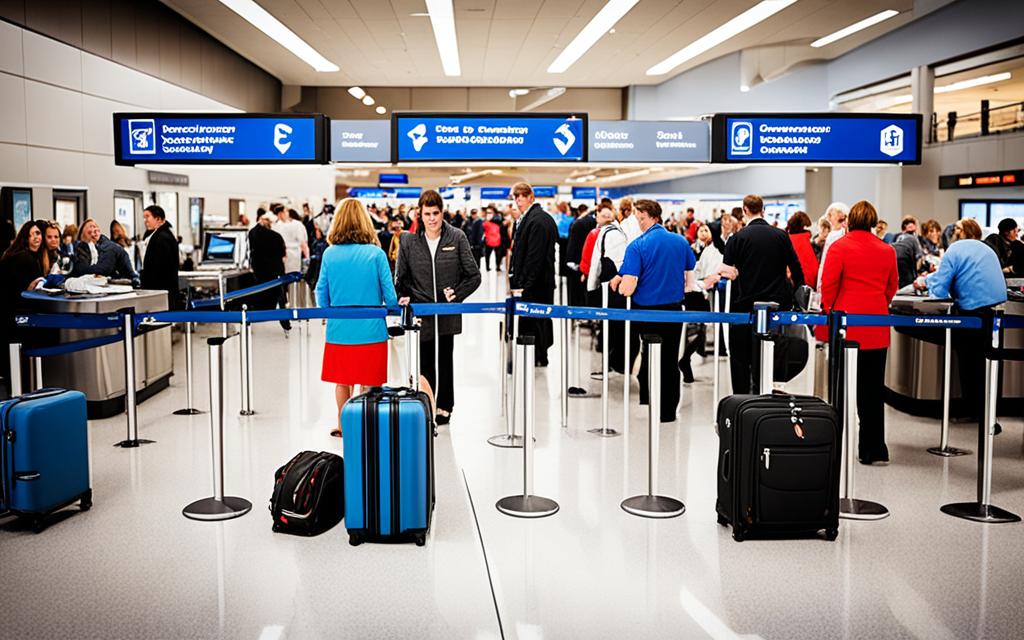
Also, think about getting to the airport early. This gives you time for surprises and delays. Following these tsa travel tips can make going through security smoother.
Preparing for Your TSA Security Check
Getting ready can make going through the TSA security check easier. Before you get to the checkpoint, think about these tips to make things smoother. They can make your trip more fun and less stressful.
What to Have Ready Before Checkpoint
It’s important to have your things ready for a quick security check. Make sure you have these items easily accessible:
- Your boarding pass
- Your government-issued ID
- Smartphone or tablet for digital boarding passes
- A bag containing your laptop and larger electronics
- All liquids in a clear, quart-sized bag, following the 3-1-1 rule
What to Expect During the Screening Process
When you get to the screening area, be ready for what comes next. Here’s what you should expect:
- Remove your shoes before walking through the scanner.
- Place your belt and jacket in a bin.
- Take out your larger electronics and put them in separate bins.
- Be ready for more screening if needed.
Following these tips will make going through the TSA screening easier and more confident.
TSA Regulations Regarding Pets
When you travel with pets, knowing TSA pet regulations is key for everyone’s safety. Pets must be in carriers made for screening at security checkpoints. These carriers need to be well-ventilated and secure to stop pets from escaping.
You might need to take your pet out of its carrier for screening. Having a leash ready can make things easier and less stressful for your pet.
Here are some important tips for traveling with pets:
- Choose an airline that allows pets and know their rules.
- Make sure the pet carrier meets TSA and airline standards.
- Keep your pet calm and comfy before, during, and after the flight.
Following these steps and knowing TSA pet rules can make your trip smoother for you and your pet. Pet owners should plan ahead to avoid problems at check-in. These guidelines help you follow the rules and make the trip better for your pet.
| Carrier Requirements | Screening Process | Airline Compliance |
|---|---|---|
| Well-ventilated and secure | Remove pet from carrier | Check carrier size and type |
| Clean and in good condition | Place carrier on the conveyor | Review airline’s pet policy |
| Easy to handle | Reassure your pet during screening | Notify airline about pet travel needs |
Frequent Traveler Options: TSA PreCheck
The tsa precheck program is great for travelers who want a smoother airport experience. It’s made for those who fly often, offering fast security checks. This means you spend less time waiting in line.
Being in TSA PreCheck lets you keep your shoes, belts, and light jackets on. You also won’t have to take out your laptop or liquids from your bag. This makes going through security much easier.
Being in TSA PreCheck also means less stress when you travel. You’ll get through security faster and with less hassle. This lets you enjoy your trip more.
- Shorter lines and wait times
- Simplified security procedure
- Increased travel convenience
- Expanded access at many U.S. airports
Overall, the tsa precheck program has big benefits that make traveling better. It’s good for both business and leisure travelers. This program can make your airport visits easier.
TSA Cares: Assistance for Travelers with Special Needs
The TSA Cares program helps travelers with special needs make flying easier. You can call TSA Cares up to 72 hours before your flight for help. This lets you share your needs and concerns, so TSA teams can get ready to assist you.
Here are key features of the TSA Cares program:
- Customizable assistance tailored to your unique needs
- Dedicated staff trained to provide support at security checkpoints
- Pre-arranged services to reduce travel anxiety
This program makes flying better for everyone, especially those with special needs. Using TSA Cares means you can travel with peace of mind. You know your needs will be met with care and understanding.

Time Management: Arriving at the Airport
Good time management is key when flying. Arriving early at the airport can prevent stress. Use these tips to plan your trip well. This gives you time for checking bags, going through security, and getting to your gate without rushing.
Knowing how to manage TSA time can change your travel for the better. Always plan enough time for both domestic and international trips. For international flights, give yourself 2 to 3 hours. For domestic flights, 1.5 to 2 hours is enough.
When planning your departure, keep these tips in mind to ensure you arrive on time:
- Check the airline’s recommendations for arrival times.
- Factor in the distance from your location to the airport.
- Account for potential traffic delays.
- Be aware of busy periods at the airport.
- Always plan for unexpected obstacles.
Think about using online check-in and learning the airport layout before you go. This helps make check-in and security smoother.
| Flight Type | Recommended Arrival Time |
|---|---|
| International Flight | 2 to 3 hours |
| Domestic Flight | 1.5 to 2 hours |
Conclusion
The TSA guidelines are key to keeping everyone safe when flying. Knowing these rules well can make your airport visit better. This summary shows how important it is to be ready and know what happens during screening. This makes your trip smoother from the beginning to the end.
Following the TSA travel tips can reduce delays and prevent unexpected issues. Remember the main points from this article, like packing your bags right and knowing about liquids and electronics rules. This recap will make you more confident in going through TSA checks.
Your careful preparation and knowledge of TSA rules will make flying better. So, as you get ready for your next flight, keep these important guidelines and tips in mind for a successful trip.