Did you know over 2 billion people travel internationally each year? This shows how many people love to explore new places. But, if it’s your first time traveling abroad, you might feel a bit nervous. Don’t worry, we’ve got you covered with some important tips and advice.
This guide is here to help you feel more confident and ready for your first trip overseas. By learning about the basics of international travel, you’ll be better prepared for any challenges you might face. And you’ll be able to enjoy every moment of your adventure.
Key Takeaways
- Preparation helps mitigate travel anxiety.
- Understanding travel requirements is crucial.
- Doing research enhances your travel experience.
- Utilizing travel apps can simplify your journey.
- Awareness of local customs enriches cultural immersion.
- Prioritizing safety ensures a worry-free trip.
Understanding International Travel Requirements
Before you start your international trip, make sure you have all the right documents. First, check that your passport is valid. Many countries need your passport to be good for at least six months after you arrive.
What Documents Do You Need?
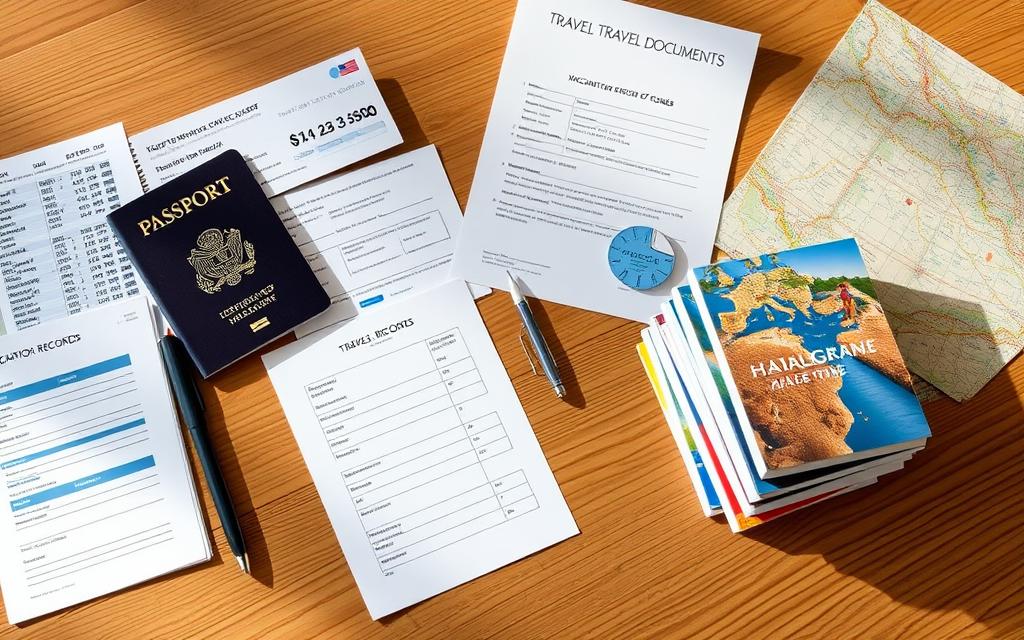
Here’s what you should have in your travel documents checklist:
- Valid passport
- Visa (if required by your destination)
- Travel insurance policy
- Emergency contact information
Passport and Visa Essentials
It’s key to know about passports and visas. Make sure your passport is up to date. Then, see if you need a visa for where you’re going. Visa rules change a lot, so check early to avoid problems.
Keep copies of your documents, both paper and digital. This way, you’re safe if something gets lost or stolen.
Health and Medical Requirements
Don’t forget about health and medical needs. Some places need vaccines or health forms, especially with global health issues. Always look up the latest health advice for your destination.
Bring any needed prescriptions and keep your health info handy. It’s part of being prepared for your trip.
| Document | Required? | Notes |
|---|---|---|
| Passport | Yes | At least six months validity |
| Visa | Depends on destination | Check entry requirements |
| Vaccination Proof | Sometimes | Check health restrictions |
| Travel Insurance | Recommended | Protection against unexpected issues |
Traveling to Another Country for the First Time
Going on your first trip abroad is thrilling. It lets you see new cultures and places. Choosing the right country can make your trip better. Picking a place with a similar language and culture can help you adjust faster.
Choosing Your Destination Wisely
Before you book anything, think about where you want to go. Consider the weather, food, and customs. Places that feel familiar can make you feel more at ease. For beginners, Western European cities are often a good choice because many people speak English.
Researching Entry Requirements
It’s important to know what you need to enter a country. Each country has its own rules for visas and documents. Make sure you know if you need a visa and get your papers ready early. Not knowing these things can cause big problems when you arrive.
Understanding Local Laws
Learning about the local laws is key to a safe trip. Laws can be very different from what you’re used to. For example, chewing gum is banned in Singapore. Knowing the laws helps you avoid trouble and enjoy your trip more.
Planning Your Trip in Advance
Planning your trip well can make it unforgettable. Start by getting everything ready early to avoid problems later. First, make a detailed plan of what you want to do and see.
Then, focus on booking your flights and where you’ll stay. This makes your trip smoother and more enjoyable.
Creating an Itinerary
Your itinerary is key to a great trip. List the places and activities you want to check out. This helps you use your time well and decide what to do next.
Having a plan keeps you organized and lets you enjoy your trip more. It’s all about making the most of your time away.
Booking Flights and Accommodations
Booking early is crucial for flights and places to stay. It helps you get the best deals and your first choice spots. Look for flexible dates and compare airlines to save money.
Choose where to stay based on what you like, whether it’s hotels, hostels, or rentals. This makes your trip feel more like home.
Utilizing Travel Apps
Technology makes traveling easier today. Use travel apps to make your trip smoother. Apps like Hopper track flight prices, and Airbnb offers unique places to stay.
These tools can make your trip planning easier and more efficient. They help you have a worry-free journey to your destination.
Preparing Your Travel Documents Checklist
Creating a travel documents checklist is key to a smooth trip. It helps you remember all the important papers you need. This way, you can relax and enjoy your journey more.
Essential Paperwork
Begin with the basics for your travel documents checklist. You’ll need:
- Your passport with at least six months of validity
- A visa, if necessary for the country you’re visiting
- Additional identification, such as a driver’s license
- Health documents, including vaccination records if required
- Travel insurance information
Keeping Copies of Your Documents
Always have copies of your travel documents. This keeps your important papers safe if they get lost or stolen. Here are some tips:
- Make digital copies saved to your phone or a cloud service.
- Store physical copies in a different bag or with a trusted travel companion.
- Keep contact information for your embassy accessible in case of emergencies.
Money Matters and Budgeting for Your Trip
Planning your finances is key when you travel abroad. First, learn about the local money where you’re going. This helps you budget and keep track of your spending. Also, tell your bank about your trip to avoid problems with your cards. Let them know your travel dates and where you’re going for easy transactions.
Understanding Local Currency
Get to know the exchange rates and money types before you leave. Every country has its own currency, which affects how much you spend. Knowing how your money compares to theirs can stop you from spending too much. Use finance apps to watch your spending as it happens.
Notifying Your Bank
Tell your bank about your travel plans before you go. This step prevents your cards from being blocked for suspicious activity. Banks might stop transactions that seem odd, especially if they’re in another country. By sharing your travel plans, your bank can keep an eye on your spending.
Choosing Travel-Friendly Credit Cards
Picking the right credit cards makes your trip better. Look for cards with no foreign fees and travel insurance. Some cards give you rewards for buying things abroad, which can save you money. Compare different bank offers to find the best fit for your travel style.
| Credit Card Features | Benefits | Considerations |
|---|---|---|
| No Foreign Transaction Fees | Save money on international purchases | May have an annual fee |
| Travel Insurance | Peace of mind while traveling | Check coverage limitations |
| Rewards Points | Earn points or miles for future travel | Redemption options may vary |
| Enhanced Fraud Protection | Reduce the risk of unauthorized transactions | Important to monitor your account regularly |
Packing Essentials for First-Time Travelers
Packing right is crucial for a great trip, especially for those traveling for the first time. Focus on clothes that are versatile and comfy. Choose items you can mix and match to suit different situations and climates.
Clothing Considerations
What you wear can greatly affect your trip. Go for clothes made of lightweight materials that dry fast. This makes them easy to wash and saves space in your bag. Think about what you’ll be doing, like walking, eating, or exploring outdoors. Here’s a list of must-have clothes:
- Comfortable walking shoes
- Lightweight layers for changing temperatures
- Quick-dry shirts and pants
- Reversible clothing for more options
- Scarves for style and staying warm
Gadgets and Travel Accessories
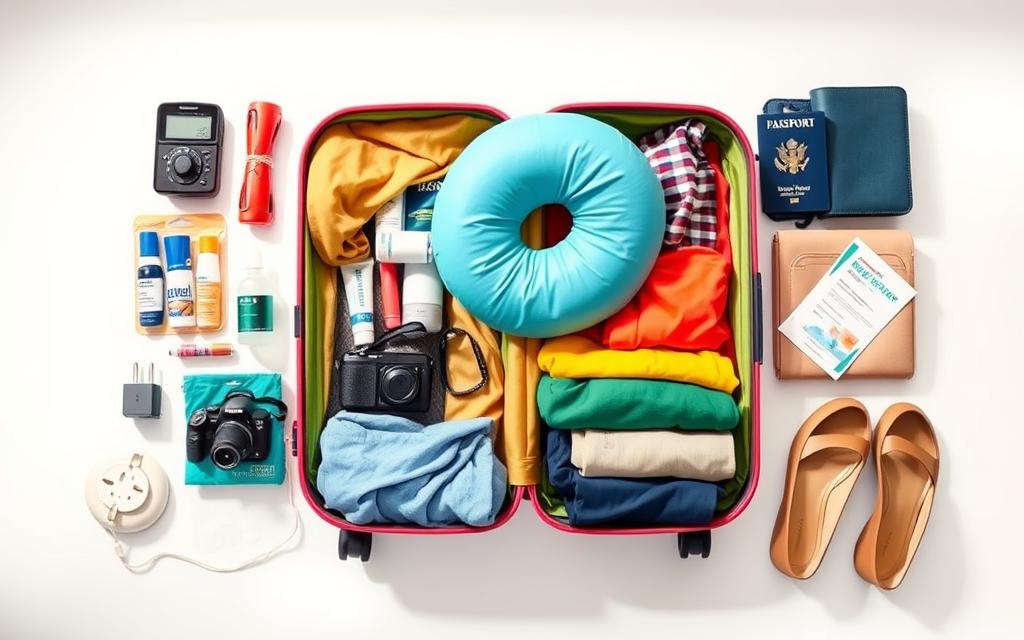
Along with clothes, packing the right accessories can make your trip better. Things like a portable charger, a universal power adapter, and packing cubes keep you organized and connected. Don’t forget these important items:
- A portable charger to keep your devices charged
- A universal travel adapter for charging your gadgets
- Packing cubes to use space wisely
- Noise-canceling headphones for a quieter trip
- Travel-sized toiletries for convenience
Jet Lag Remedies for a Smooth Transition
Jet lag can mess up your travel plans. It’s key to use good jet lag remedies. Start by adjusting your sleep schedule before you leave. This means changing your bedtime to match your new time zone.
Also, drinking plenty of water during your trip helps fight jet lag. Not drinking enough water can make you feel more tired and confused. So, drink water before and during the flight. Try to avoid too much caffeine and alcohol, as they can dry you out.
Adjusting Your Sleep Schedule
Start changing your sleep schedule a few days before your trip. Go to bed an hour earlier or later, depending on where you’re going. Being consistent is important. This helps your body get ready for the new time zone and can lessen tiredness.
Staying Hydrated
It’s vital to drink water during your flight to fight jet lag. Not drinking enough water can make you feel more tired and lost. Drink lots of water before and during the flight. And try to cut down on caffeine and alcohol, as they can dry you out.
Natural Remedies to Combat Jet Lag
Think about using natural remedies. Melatonin, a hormone that controls sleep, can really help adjust your sleep schedule. Taking melatonin before bed can make it easier to adapt to your new time zone. You can also try herbal teas and essential oils that help you relax and sleep better.
Cultural Immersion Tips for New Travelers
Traveling internationally is a great way to dive into new cultures. By connecting with the local community, you make lasting memories and learn new things. It’s important to understand local customs to make your stay better and connect with people.
Understanding Local Customs
Every culture has its own set of rules and manners. Before you go, take time to learn about these customs. You’ll find out about things like:
- Dining etiquette, such as the right way to use utensils
- Dress codes, especially for religious places or special events
- What gestures and body language mean
- How to say hello and goodbye
Embracing the Local Language
Learning a few words in the local language is super helpful. It makes talking to people easier and helps you connect more with them. Here are some tips:
- Begin with simple greetings and phrases.
- Use apps that translate in real-time for conversations.
- Talk with locals to get better at speaking.
- Join language exchanges or workshops in the area.
Travel Safety Guidelines You Should Follow
Putting safety first makes your trip better. Following key travel safety tips lets you move through new places with ease. Being alert and ready can lower risks and let you enjoy your trip more.
Staying Aware of Your Surroundings
Always be aware of what’s around you when you’re in new places. Watch the people and things happening around you. If something seems wrong or doesn’t feel right, listen to your gut and find a safer spot.
Learn about the area you’re visiting. Know safe paths and what dangers might be there. This helps keep you safe as you travel.
Protecting Your Belongings
Keeping your stuff safe is crucial when you’re traveling. Use bags that are hard for pickpockets to get into. A crossbody bag or one with zippers is a good choice.
Keep important things like your passport and money close to you. Be careful with your belongings when you’re eating or waiting in crowded places. Small steps can make a big difference in keeping your things safe.
Emergency Contacts to Keep Handy
It’s smart to have emergency contacts ready. List local emergency numbers, your embassy, and friends or contacts in the area. Having this info close by can ease your mind in tricky situations.
Signing up for the Smart Traveler Enrollment Program (STEP) can also help. It makes it easier to communicate while you’re away. This way, you stay informed and supported on your travels.
Transportation Options for Comfort and Efficiency
Getting around in a new place can really change how you see your trip. It’s key to know the local transport options to stay comfy and efficient. Look into different ways to move, like public transport and rideshare services.
Choosing Local Transportation
Think about using buses, subways, trams, and taxis to make your trip easier. Local transport not only shows you the daily life of the area but also saves you money. Each city has its own transport options for visitors.
Apps and Services for Travelers
Using technology can make moving around better. Apps like Uber and Lyft make getting from one place to another easy. They give fare estimates, driver ratings, and route info. Also, local apps can give you special benefits, helping you move like a local.
Conclusion
Getting ready for your first trip abroad? Remember, good planning makes a big difference. Knowing about the documents you need, health tips, and cultural differences boosts your confidence. This guide shares key tips for traveling internationally, showing how important it is to do your homework.
This article gives you the confidence to go on your international trip. Be ready for new experiences and don’t be afraid to explore. A good plan lets you enjoy the world’s cultures and sights without too many problems.
Success in your first trip abroad comes from being prepared and flexible. With the right knowledge, you can handle any challenges and enjoy everything that’s new. So, get excited and start your journey!