
Travel nursing is a challenging yet exciting career that requires constant adaptation to new environments. To thrive in this career, you can benefit from embracing cultural diversity, establishing professional excellence, building effective communication skills, prioritizing personal well-being, integrating into new teams and communities, and being open to new methodologies and healthcare technologies.
Key Takeaways:
- Embrace cultural diversity and adjust to different cultural nuances in each clinic.
- Establish high professional standards and pursue continuous learning and development.
- Build effective communication skills and utilize digital tools for seamless information flow.
- Prioritize personal well-being to maintain work-life balance and prevent burnout.
- Smoothly integrate into new teams and communities for personal and professional enrichment.
Embrace Cultural Diversity
As a travel nurse, you will encounter clinics with unique cultural nuances. It is crucial for you to recognize and adapt to these differences to provide the best possible care. Embracing cultural diversity not only helps you deliver culturally competent care but also earns the respect of your patients and colleagues.
To thrive in a culturally diverse healthcare setting, it’s essential to learn about various aspects of the local culture. This includes understanding the local language, regional dialects, communication styles, prevalent healthcare beliefs, and attitudes towards medical interventions.
Moreover, familiarizing yourself with common traditional medicines, social norms and etiquette, major religious beliefs, and customary dietary restrictions enables you to navigate sensitive cultural situations effectively. By doing so, you can establish meaningful connections with your patients and offer compassionate care tailored to their individual needs.
“Learning about the local culture and integrating that knowledge into your practice is key to providing culturally competent care.” – Elizabeth Wellington, RN
Benefits of Cultural Competence
Culturally competent care leads to improved patient outcomes and better healthcare experiences. By actively embracing cultural diversity, you can:
- Enhance patient trust and develop stronger patient-provider relationships
- Minimize misunderstandings and potential conflicts
- Improve patient satisfaction and adherence to treatment plans
- Facilitate effective communication and collaboration with colleagues from diverse backgrounds
- Promote a supportive and inclusive healthcare environment
Cultural Competence in Action
Let’s consider a scenario where a travel nurse is assigned to a clinic with a large Hispanic population. By embracing cultural diversity, the nurse takes the initiative to learn basic Spanish phrases and communicate effectively with patients who may have limited English proficiency. This simple effort helps build trust and rapport with the patients, leading to better patient experiences and improved health outcomes.
| Cultural Aspect | Actions/Considerations |
|---|---|
| Language | Learn basic phrases to facilitate communication |
| Communication Styles | Adapt to direct or indirect communication as appropriate |
| Healthcare Beliefs | Understand prevalent cultural beliefs about illness and healing |
| Attitudes towards Medical Interventions | Respect and address patient concerns or preferences |
| Traditional Medicines | Inquire about and consider the use of traditional remedies in conjunction with evidence-based practice |
| Social Norms and Etiquette | Observe and respect cultural norms in patient interactions |
| Religious Beliefs | Accommodate religious practices and dietary requirements |
| Customary Dietary Restrictions | Ensure appropriate meal options and dietary considerations |
Establish Professional Excellence
Travel nurses play a crucial role in healthcare delivery, adapting to diverse environments and providing quality care wherever they go. To succeed in this dynamic field, it is essential to establish and maintain professional excellence. This involves staying up-to-date with nursing practices, understanding the unique healthcare laws and practices of different states, and pursuing continuous learning and professional development.
As a travel nurse, you need to be aware of the latest advancements and best practices in nursing. Stay informed about industry updates, new research findings, and emerging healthcare technologies. By actively engaging in continuing education, attending workshops, and participating in online courses, you can enhance your skills and broaden your knowledge base.
Being well-versed in the healthcare laws and practices of different states is also crucial for travel nurses. Each state has its own regulations and protocols, including licensure requirements, scope of practice, and documentation standards. Familiarize yourself with these regulations to ensure compliance and provide safe, competent care.
Continuous professional development is not only beneficial for your current assignments, but it also promotes long-term career growth. By expanding your expertise, you increase your marketability and open doors to more lucrative opportunities. Consider pursuing specialized certifications in areas of interest or gaining proficiency in relevant nursing specialties.
Remember, professional excellence is a continuous journey. Embrace lifelong learning and commit to staying at the forefront of your field. By doing so, you not only enhance your own professional growth but also contribute to providing high-quality care to patients across different healthcare settings.
Benefits of Establishing Professional Excellence
Establishing professional excellence as a travel nurse brings numerous benefits, including:
- Increased job opportunities and career advancement prospects
- Enhanced clinical competence and confidence in delivering patient care
- Greater earning potential through specialized certifications and skills
- Improved patient outcomes and patient satisfaction
- Recognition and respect from colleagues and healthcare professionals
- Opportunities for leadership and mentorship roles
| Benefits | Description |
|---|---|
| Increased job opportunities and career advancement prospects | Establishing professional excellence increases your marketability and opens doors to a wider range of job opportunities. It also positions you for career advancement and leadership roles. |
| Enhanced clinical competence and confidence | By staying updated with best practices and expanding your knowledge base, you become a more competent and confident clinician. This, in turn, improves the quality of care you provide to patients. |
| Greater earning potential | Specialized certifications and skills can lead to higher-paying travel nursing assignments and increase your earning potential. |
| Improved patient outcomes | Professional excellence directly translates to better patient outcomes. By continuously improving your skills and staying informed, you can deliver safer and more effective care. |
| Recognition and respect | By establishing professional excellence, you gain recognition and respect from your colleagues and healthcare professionals. This fosters a positive work environment and professional relationships. |
| Opportunities for leadership and mentorship | As you establish yourself as an expert in your field, you may have opportunities to take on leadership roles or become a mentor to other travel nurses. |
Build Effective Communication Skills
Effective communication is essential for travel nurses as they frequently collaborate with different teams. By adapting to various communication styles, including direct, indirect, and emotive communication, travel nurses can foster strong professional relationships and ensure efficient delivery of care.
Utilizing digital tools such as electronic health records, communication apps, and telehealth software can further enhance communication with colleagues and patients, facilitating a seamless flow of information throughout the healthcare setting. These technological advancements not only streamline communication but also promote timely and accurate documentation, improving patient outcomes.
Adapting to Different Communication Styles
As a travel nurse, you will encounter diverse communication styles among healthcare professionals, patients, and their families. It is crucial to adapt and understand these styles to establish effective rapport and promote collaboration.
“The most important thing in communication is to hear what isn’t being said.” – Peter Drucker
By actively listening and observing non-verbal cues, such as body language and facial expressions, you can better understand patients’ needs and provide empathetic care. Recognizing and respecting cultural differences in communication styles can also contribute to building trust and ensuring patient satisfaction.
Utilizing Digital Communication Tools
The advent of digital communication tools has revolutionized healthcare delivery. Travel nurses can leverage electronic health records (EHRs) to access patient information and communicate critical updates to the healthcare team. Communication apps and telehealth software enable real-time collaboration, facilitating consultation with specialists and ensuring continuity of care, especially in remote assignments.
With digital tools, you can communicate efficiently and securely, even across different time zones and locations. These technologies not only enhance patient safety but also contribute to improved efficiency and reduced healthcare costs.
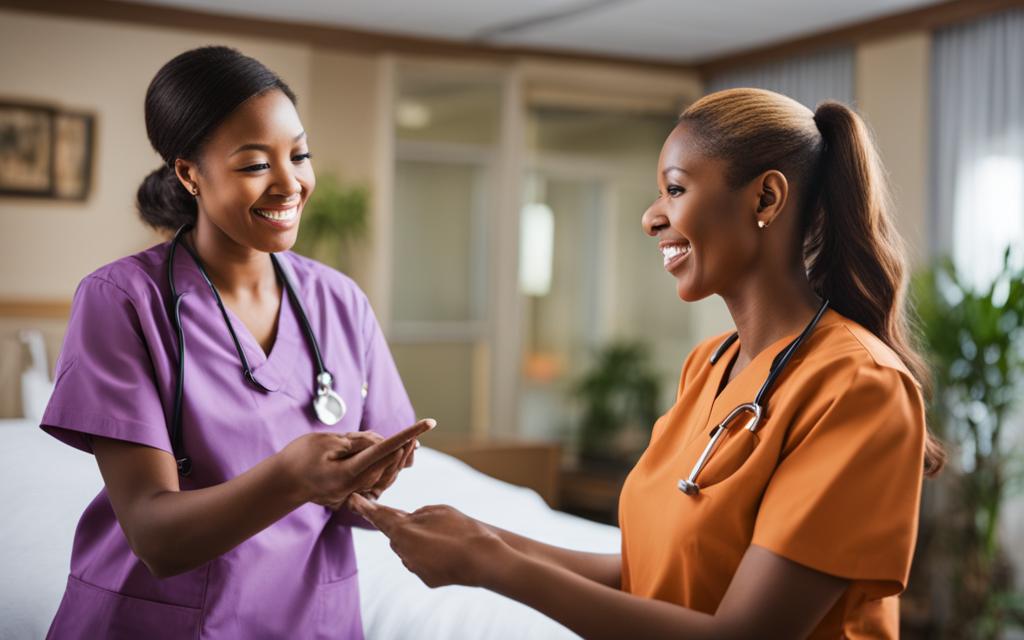
Remember, effective communication is not only about conveying information but also about building relationships, fostering trust, and providing compassionate care. Continually honing your communication skills as a travel nurse will not only benefit your professional growth but also enhance the overall quality of care you provide to your patients.
Prioritize Personal Wellbeing
Maintaining work-life balance is critical for travel nurses to prevent burnout. As a travel nurse, it’s important to prioritize your personal wellbeing to ensure you can provide the best care to your patients. Here are some strategies to help you maintain a healthy work-life balance:
- Engage in activities that relax and rejuvenate you: Take time for yourself and engage in activities that help you unwind and recharge. Whether it’s going for a hike in nature, reading a book, practicing yoga, biking, or swimming, find activities that bring you joy and help you de-stress.
- Maintain a support network: Surround yourself with a strong support network of friends, family, and fellow travel nurses who can provide emotional support and understanding. Having someone to talk to and lean on can make a big difference in your overall wellbeing.
- Eat properly: Proper nutrition is essential for your physical and mental health. Take the time to prepare healthy meals and familiarize yourself with local food options that align with your dietary preferences and requirements.
To emphasize the importance of personal wellbeing, here’s an image that represents relaxation and self-care:
“Taking care of yourself is paramount. You can’t pour from an empty cup. Take time to recharge and replenish, so you can continue to provide compassionate care to your patients.” – Unknown
Integrate Into New Teams and Communities
As a travel nurse, you will frequently find yourself joining new teams and immersing yourself in diverse communities. Successfully integrating into these environments is essential for a smooth transition and a fulfilling experience.
Building positive relationships with your colleagues is a key step in integrating into new teams. Be friendly, approachable, and open to collaboration. Take the time to get to know your fellow nurses, doctors, and healthcare professionals. Show interest in their experiences and expertise, and be willing to learn from them. By fostering a supportive and inclusive work environment, you can create a strong network that will not only enhance your professional growth but also provide you with vital emotional support.
Participating in community events and activities is another effective strategy for integration. Take advantage of opportunities to engage with locals and gain a deeper understanding of the community you are serving. Attend local festivals, volunteer for community outreach programs, or join social clubs and organizations. By immersing yourself in the local culture, you’ll not only enrich your travel experience but also establish connections beyond the workplace.
Connecting with other healthcare professionals outside of your immediate team can also be beneficial. Attend professional conferences, join online nursing forums, or participate in continuing education workshops. These interactions not only broaden your professional network but also expose you to new ideas, innovations, and career advancement opportunities.
Remember, integrating into new teams and communities requires effort, openness, and a genuine interest in the people and cultures you encounter. By building positive relationships, participating in community events, and connecting with other healthcare professionals, you’ll not only enhance your travel nursing experience but also make a lasting impact on the individuals and communities you serve.
Be Open to New Methodologies and Healthcare Technologies
As a travel nurse, you have the opportunity to encounter different healthcare methodologies and technologies in each assignment. Embracing new protocols and technologies is crucial for providing efficient care and staying ahead in your field. By being open to learning and integrating these advancements into your practice, you can enhance the quality of your patient care and increase your adaptability to different healthcare scenarios.
Staying updated with the latest healthcare trends is essential for a travel nurse. Make it a priority to attend workshops and webinars that focus on emerging methodologies and healthcare technologies. These learning opportunities not only expand your skill set but also provide valuable insights that can benefit your patients and contribute to your professional growth.
Remember that being open to new methodologies and healthcare technologies doesn’t mean abandoning your existing knowledge and skills. Instead, it means being flexible and willing to incorporate new approaches that can enhance your effectiveness as a nurse. By embracing innovation, you can stay at the forefront of healthcare advancements and provide the best possible care to your patients.
So, as you embark on your travel nursing journey, keep an open mind and embrace the ever-evolving world of healthcare methodologies and technologies. Your willingness to adapt and learn will not only benefit your patients but also set you apart as an exceptional travel nurse in the field.
FAQ
What skills do travel nurses need to succeed?
Travel nurses need to embrace cultural diversity, establish professional excellence, build effective communication skills, prioritize personal well-being, integrate into new teams and communities, and be open to new methodologies and healthcare technologies.
How can travel nurses embrace cultural diversity?
Travel nurses can embrace cultural diversity by learning about the local language, communication styles, prevalent healthcare beliefs, social norms, religious beliefs, and dietary restrictions of the communities they work in.
How can travel nurses establish professional excellence?
Travel nurses can establish professional excellence by staying updated on nursing practices, understanding the unique healthcare laws and practices of different states, and pursuing continuous learning and professional development.
What are some tips for building effective communication skills?
Travel nurses can build effective communication skills by adapting to different communication styles, utilizing digital tools, and maintaining a seamless flow of information with colleagues and patients.
How can travel nurses prioritize personal well-being?
Travel nurses can prioritize personal well-being by engaging in activities that relax and rejuvenate them, maintaining a support network, and eating properly.
How can travel nurses integrate into new teams and communities?
Travel nurses can integrate into new teams and communities by building positive relationships with colleagues, participating in community events and activities, and connecting with other healthcare professionals.
Why is it important for travel nurses to be open to new methodologies and healthcare technologies?
It is important for travel nurses to be open to new methodologies and healthcare technologies to provide efficient care and stay updated on the latest healthcare trends.