Imagine being at the airport, filled with the buzz of travelers and the sound of planes taking off. You might feel both excited and a bit nervous, especially if it’s your first time. Learning how to travel by flight can seem tough, but with the right tips, you’ll feel more confident. Picture yourself moving through the airport easily, knowing exactly what to do and what to expect.
This is what good travel planning is all about. It’s about getting to know the process, from booking your ticket to checking in. In this article, we’ll share important steps and tips to make your flight smooth and fun.
Key Takeaways
- Preparation is key for a smooth journey.
- Familiarize yourself with airport processes.
- Research your flight options thoroughly.
- Understand baggage policies to avoid surprises.
- Plan your arrival time to the airport to minimize stress.
- Keep essential documentation readily available.
Understanding Air Travel Basics
Learning the basics of air travel makes flying smoother. Booking early helps get better prices, especially when lots of people are traveling. You can pick from economy, business, or first class based on your budget and comfort needs.
It’s important to know about your airline’s baggage rules. Each airline has its own rules on how many bags you can bring, their weight, and extra fees. Knowing this can prevent surprise charges at the airport.
You’ll need valid ID for all flights. Keep an accepted ID, like a driver’s license or passport, handy for checks. Understanding how airlines handle cancellations and changes helps with planning your trip.
Security checks can be a hassle, but being prepared helps. Know what items are not allowed and pack your carry-on wisely. These tips can make your first flight less stressful and easier to manage.
How to Travel Flight: Key Steps to Book Your Ticket
Booking a flight takes a few key steps. It’s important to know how to look at flight options, use flight aggregators, and understand baggage policies. These steps make traveling smoother.
Researching Flight Options
Starting with flight research is crucial. Compare airlines and prices to find deals that fit your budget and schedule. Use tools like Google Flights and Expedia to sort by price, time, and layovers.
This helps you make smart choices when booking your flight.
Using Flight Aggregators
Flight aggregators are great for travelers. They bring together fares from many airlines and agencies, making searching easier. Set up alerts for price changes to find cheap flights.
With patience and flexibility, you can find the best deals.
Understanding Baggage Policies
Knowing about baggage policies can save you from surprise fees. Each airline has its own rules for checked and carry-on bags. Make sure to check the airline’s rules to avoid problems at the airport.
Understanding these policies helps with a smooth check-in, making your trip start well.
Airfare Booking Strategies
When you’re looking for the best flight deals, having good airfare booking strategies is key. With the right tactics, you can save a lot on your travel costs. This part will share important tips to help you get great tickets.
Finding the Best Flight Deals
To find the best flight deals, use tools that track prices. These tools tell you when fares change and when prices go down. This lets you grab deals fast. Also, sign up for airline newsletters or fare alerts to get exclusive offers and discounts.
Timing Your Bookings for Discounts
Booking at the right time is crucial for getting discounts. Booking tickets a few weeks ahead usually gets you better rates. If you can be flexible, last-minute flights might surprise you with savings. Keep an eye on seasonal trends and peak travel times for your destination to plan better.
| Booking Timing | Best Practices | Potential Discounts |
|---|---|---|
| 3+ Months in Advance | Use fare alerts and set price thresholds | Up to 30% savings |
| 1-3 Months in Advance | Book mid-week for lower prices | 15-20% savings |
| 1-2 Weeks in Advance | Keep an eye on last-minute deals | Possible 10-15% savings |
| Less than 1 Week | Flexible options can yield significant last-minute flights | Varies greatly, up to 50% off |
Preparing for Your Trip
Getting ready for a trip is crucial for a smooth journey. Knowing about travel insurance and having all your documents in order can make a big difference. Here’s what you should think about before you start your trip.
Travel Insurance: Is It Worth It?
Looking into travel insurance is key for trip protection against unexpected events. These can include trip cancellations, delays, or losing your luggage. It’s important to pick a policy that meets your needs, like medical emergencies or trip interruptions. Travel insurance can give you peace of mind, making it worth the cost.
Document Readiness for Travel
Getting your documents ready is a must for any trip. Begin by collecting all the documents you need to avoid stress at the last minute. Make sure you have an ID for flying, passports, and any visas needed. Keep your tickets, itineraries, and confirmations on your mobile device. Without the right documents, you could face delays or miss your flights.

| Document Type | Description | Where to Save |
|---|---|---|
| Government-issued ID | Essential for domestic flights; must match the name on your ticket. | Physical copy in wallet and digital copy on mobile. |
| Passport | Necessary for international travel; check expiration date. | Physical copy in passport holder and scanned digital copy. |
| Itinerary | Details of flight, accommodation, and activities. | Digital copy on mobile and printed hard copy. |
| Tickets | Proof of purchase for flights and attractions. | Digital copy on mobile and printed copies if necessary. |
Being well-prepared for your trip will make your journey better and reduce any problems. Make sure to focus on travel insurance and getting your documents ready for a smooth trip.
Getting to the Airport
Planning your trip well is key to a smooth start. Knowing the best times to arrive and your transport options can make flying better. It’s important for a good experience.
Best Times to Arrive
Plan your airport arrival time to avoid a last-minute rush. For domestic flights, aim to arrive 1.5 to 2 hours early. For international flights, give yourself 3 hours before takeoff. This extra time covers delays, security, and check-in.
Transportation Options to the Airport
There are many ways to get to the airport. You can drive yourself, use a ride-share, or take public transport. Shuttles also offer services from different spots. Pick what fits your schedule, budget, and likes for a smooth trip.
| Transportation Method | Cost Estimate | Travel Time (Average) | Convenience Level |
|---|---|---|---|
| Personal Vehicle | Varies (gas + parking) | 30-60 mins | High |
| Rideshare (e.g., Uber, Lyft) | $30-$100 | 30-60 mins | Very High |
| Public Transit | $2-$10 | 30-90 mins | Medium |
| Airport Shuttle | $15-$50 | 30-60 mins | High |
Navigating Airport Check-in and Security
Getting through check-in and airport security smoothly is key for a good trip. Knowing the steps can make your airport time less stressful and more efficient.
Check-in Procedures
Check-in rules change with each airline, so it’s good to know what they need. You’ll usually show a valid ID and your boarding pass at the counter or a self-service kiosk. Check in early, keeping an eye on your flight’s boarding time, to avoid delays.
Speeding Up TSA Screening
Fast TSA screening is important for a smooth airport experience. Learn the security steps to make it easier. This includes taking off your shoes, unpacking liquids, and putting electronics in bins. Being ready helps you get through TSA screening faster and with less stress.

Boarding and In-flight Experience
The boarding process is a key part of your travel journey. It’s when you get on the plane, usually in groups based on your ticket type. Listen for gate announcements to know when it’s your turn. Keep your boarding pass and ID handy for checks. Getting ready early makes flying more comfortable from the start.
What to Expect During Boarding
When boarding starts, flights are called in groups to keep things orderly. This way, everyone gets on without blocking the aisles. Once inside, put your carry-on bags away in bins or under the seat in front. Flight attendants help with boarding and are key to a smooth start.
Understanding In-flight Services
Knowing what in-flight services are available is key to a great flight. Airlines offer meals, entertainment, and other comforts. Check what your airline provides to know what to expect. Flight crew will tell you about special services, drinks, and help available during the flight.
| Service Type | Airline A | Airline B | Airline C |
|---|---|---|---|
| Seat Selection | Complimentary | Paid Option | Complimentary |
| Meal Service | Free Snacks | Full Meal | No Meals |
| Entertainment | On-Demand Movies | Live TV | Screenless |
| Wi-Fi | Free | Paid | Free |
Knowing about in-flight services helps you enjoy your trip more. It makes flying more comfortable and fun. So, take in all the perks as you soar through the skies.
Handling Your Arrival at the Destination
Arriving at your destination can be both exciting and stressful. Knowing how to handle baggage claim and the customs process for international flights can make things smoother. With the right tips, you can easily navigate these steps.
Baggage Claim Tips
After your flight lands, look for signs that lead to baggage claim to get your luggage. Check the airport monitors for the carousel number for your flight. Remember, waiting for your bags can take a bit, so stay patient as others get theirs too.
Going Through Customs for International Flights
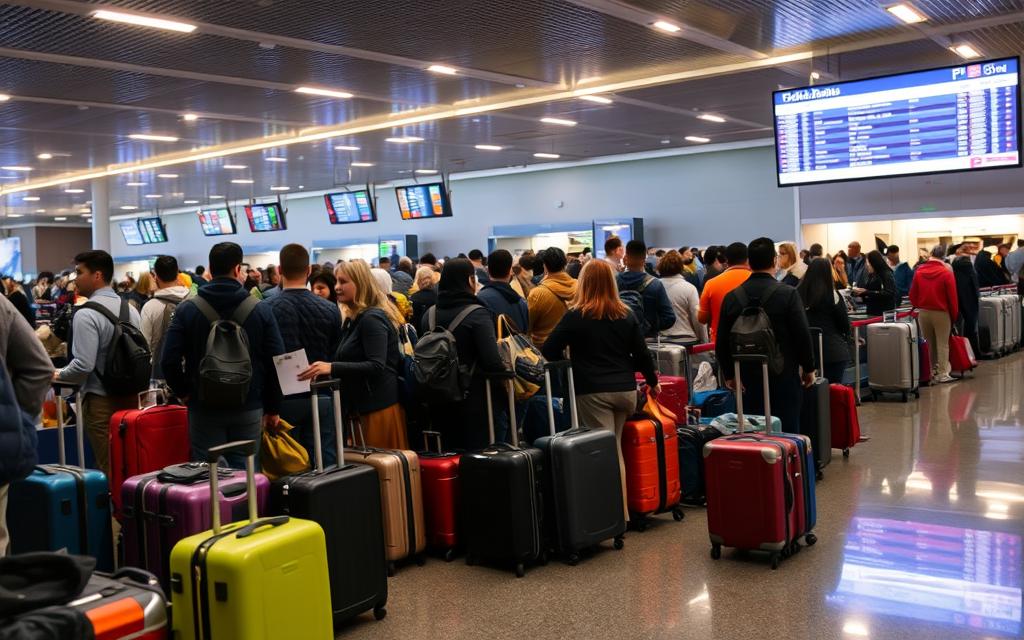
If you’re coming from an international flight, you’ll need to go through customs. Make sure you have your passport, completed declaration forms, and any items that might need duties. Knowing customs rules is key to avoid delays or problems when you arrive.
Tips for Connecting Flights
Connecting flights can make your travel more complicated. But, with some planning, you can make your layovers easier. Here are some key tips to help you stay on track and enjoy your trip.
Managing Layovers Effectively
When booking connecting flights, always leave enough time between them. This extra time helps you move between gates smoothly and deals with any unexpected delays. Here are some tips for managing layovers:
- Check airport maps before your trip to understand the layout.
- Know your airline’s procedures for connecting flights.
- Use your wait time to refresh, grab a meal, or shop.
Staying Updated on Flight Changes
It’s crucial to keep up with any changes to your flight. Signing up for alerts from your airline means you get updates on gate changes, delays, or cancellations right away. This helps you stay calm and plan better. Here are some ways to stay informed:
- Download your airline’s mobile app for live notifications.
- Check your email and messages for flight alerts.
- Arrive at the airport early to address any sudden changes.
Conclusion
Air travel doesn’t have to be overwhelming. By following the essential tips in this guide, you can manage everything from booking tickets to reaching your destination. This guide shows that preparation is key. With the right information, you can handle airports, airline policies, and travel logistics with confidence.
As you get ready for your trip, keep these final tips in mind: stay organized, be flexible, and plan for the unexpected. A well-prepared traveler is a happy traveler. Your flight experience can be enjoyable instead of stressful. So, get ready with knowledge, and make your next trip a smooth adventure.
Whether it’s your first flight or your fiftieth, each trip is a chance for discovery. Embrace your travel experience with a positive mindset. You’ll find that the skies are not just for getting from one place to another but also for making new memories and stories. Happy travels!