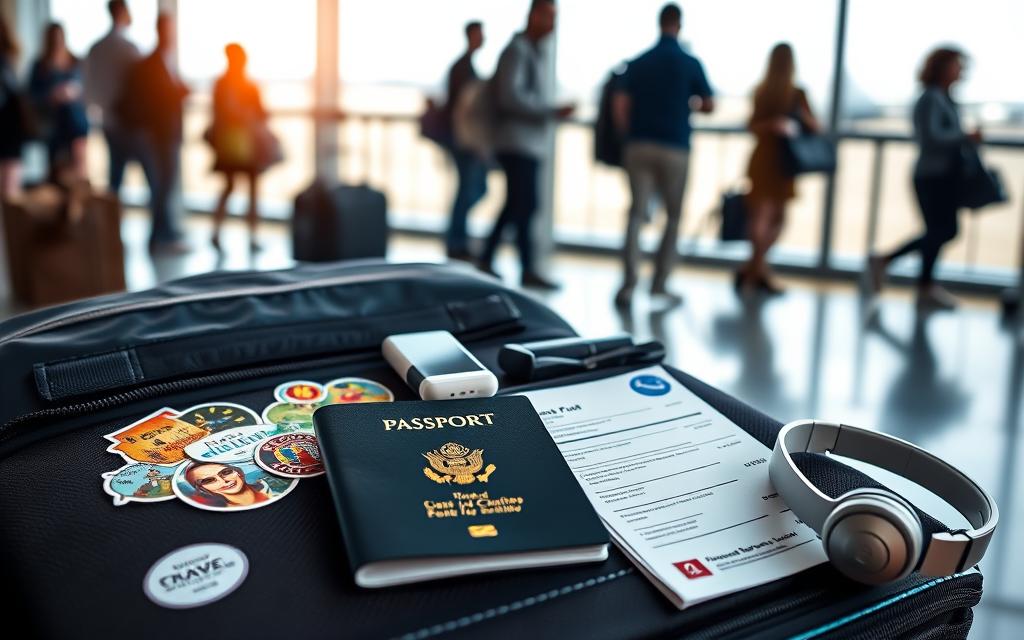
Imagine you’re at the airport, feeling excited for a long-awaited vacation. But then, anxiety hits like an unwanted guest. You worry about your travel documents, baggage rules, and if you packed everything you need. Does this sound like you? Traveling can be tough, especially if it’s your first time or it’s been a while.
To make your trip smooth, there are key things to know before you board. These include understanding airport rules and getting ready for your flight. Knowing these details can help reduce stress and make your trip enjoyable.
Key Takeaways
- Familiarize yourself with essential travel tips to ease your journey.
- Understanding airport procedures is crucial for a smooth experience.
- Review pre-flight preparations to avoid common pitfalls.
- Know your baggage restrictions before heading to the airport.
- Arrive early to help mitigate last-minute rushes.
- Prepare your documentation well in advance for stress-free boarding.
Understanding Baggage Restrictions
When you’re getting ready for your flight, it’s key to understand the baggage rules set by airlines. These rules can change how you pack and affect your airport experience. Knowing the rules for checked and carry-on luggage, and the fees for extra bags, helps you pack better and avoid surprise charges.
Checked vs. Carry-On Luggage
Checked luggage is the big bags you give to the airline at the counter. Carry-on luggage is the bags you keep with you in the cabin. Most airlines let you bring one full-size carry-on and one personal item, like a backpack or purse, without extra cost. This gives you options for how to carry your stuff.
Weight and Size Limits
It’s also important to know the weight and size limits for luggage. Checked bags usually can’t weigh more than 50 pounds. Carry-on bags have size limits, like 22 x 14 x 9 inches. If your luggage is too heavy or big, you might face extra fees, which can be $35 to $120, depending on the airline.
Fees for Excess Baggage
Knowing about extra baggage fees can save you a lot of money. Each airline has its own prices for bags that are too heavy or big. Some charge by weight, others by flat rate. Learning these fees can help you plan your budget and avoid surprises.
| Airline | Checked Luggage Limit (Weight) | Carry-On Luggage Limit (Dimensions) | Excess Baggage Fee |
|---|---|---|---|
| American Airlines | 50 lbs | 22 x 14 x 9 in | $75 (1st piece over limit) |
| Delta Airlines | 50 lbs | 22 x 14 x 9 in | $100 (1st piece over limit) |
| United Airlines | 50 lbs | 22 x 14 x 9 in | $100 (1st piece over limit) |
| Southwest Airlines | 50 lbs | 24 x 16 x 10 in | No fee for 1st & 2nd checked bags |
Pre-Flight Preparations
Getting ready for your flight means planning well to make your trip smooth. It’s important to pack right and have your documents ready. This helps reduce stress and makes your journey better.
Essential Items to Pack in Your Carry-On
Your carry-on is key during your trip. Packing the right things can help, especially if your luggage gets lost or there are delays. Start with personal items like:
- Prescription medications
- Electronics like laptops and tablets
- Chargers and power banks
- Travel-sized toiletries
- Extra clothing or a light jacket
These items are important for your comfort and being ready for anything.
Travel Documentation Checklist
Having your documents ready is also crucial for a smooth trip. Make sure you have these documents easily found:
- ID or driver’s license
- Passport (if traveling internationally)
- Boarding passes
- Travel insurance information
- Any necessary visas
Organizing these documents early helps you move quickly through check-in and security.
Before Boarding: Arriving at the Airport
Planning your arrival at the airport is key for a smooth trip. Having enough time before boarding prevents last-minute stress. Knowing the best time to arrive is important, especially when many people are traveling.
Recommended Arrival Time
It’s wise to get to the airport two hours before domestic flights and three hours for international ones. This gives you time to check in, go through security, and fix any issues. Following this advice can make your start to the trip less stressful.
Navigating Airport Surges
Airport surges can affect your travel plans. Busy times like holidays mean more people and longer waits at check-in and security. Keep an eye on your flight status and know when it’s busy. Arriving early during these times helps you deal with crowds and reduces stress.
Security Check Procedures
Learning about security check procedures can make your trip better. It’s important to know TSA guidelines to go through airport security fast. Each airport is different, but knowing what to expect keeps you calm and ready.
TSA Guidelines and Restrictions
The Transportation Security Administration (TSA) has set rules for safety. These rules often cover:
- Limits on liquids in carry-on bags, letting you have only containers of 3.4 ounces (100 milliliters) or smaller, all in one quart-sized bag.
- Items like sharp objects, flammable items, and weapons are not allowed.
- Rules on how to handle electronic devices, like putting laptops in separate bins for screening.
What to Expect at Security
When you get to the security check, you’ll see several steps to make things smoother. You’ll usually need to:
- Show your boarding pass and ID at the security area entrance.
- Take off shoes, belts, and jackets, and remove big electronics from your bag.
- Put all items on the conveyor belt for screening while you go through the body scanner.
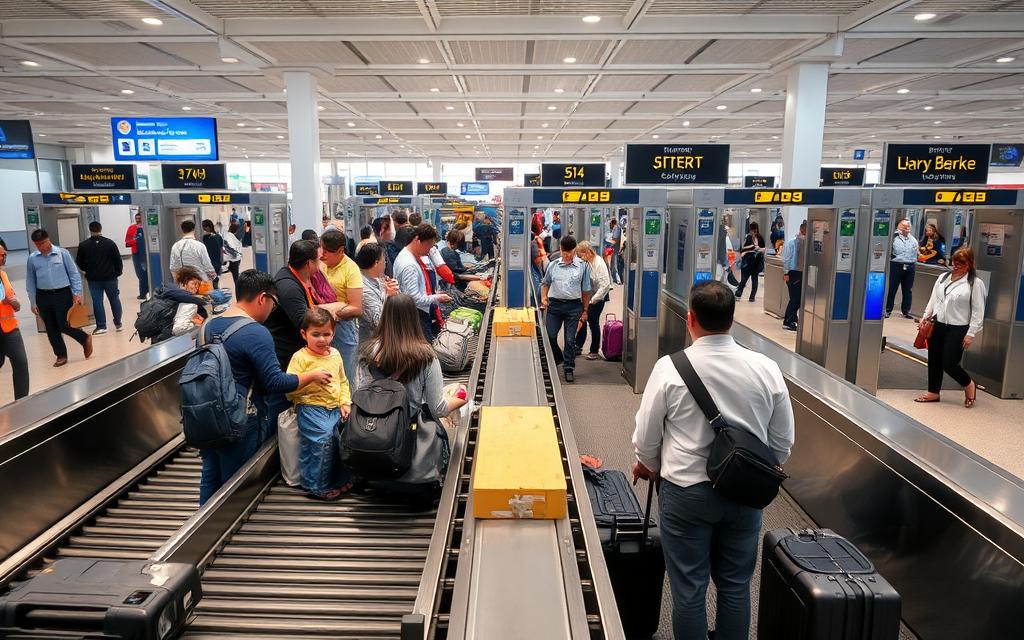
Knowing these steps can reduce stress and make you move faster through security. Being informed about TSA guidelines helps keep your trip on track. Get ready early for a smooth security check, so you can enjoy your journey.
Boarding Pass Verification
Before you board your flight, it’s key to know about boarding pass verification. You’ll see different types of passes. Each one is vital for a smooth boarding.
Types of Boarding Passes
You’ll mainly find two kinds of boarding passes: digital and printed. Both prove you have a flight and let you on the plane. Knowing the differences helps you pick what suits you best.
Digital vs. Printed Boarding Passes
A digital boarding pass lets you see your flight info on your airline’s app. It’s handy because it cuts out paper and speeds up checks. The printed pass is given at the airport or printed at home. Both need verification, so keep your pass ready. This makes boarding quicker and improves your trip.
| Feature | Digital Boarding Pass | Printed Boarding Pass |
|---|---|---|
| Access Method | Mobile App | Print from Home/Airport |
| Convenience | Highly Convenient | Less Convenient |
| Environmentally Friendly | Yes | No |
| Verification Speed | Faster | Standard |
Understanding Priority Boarding
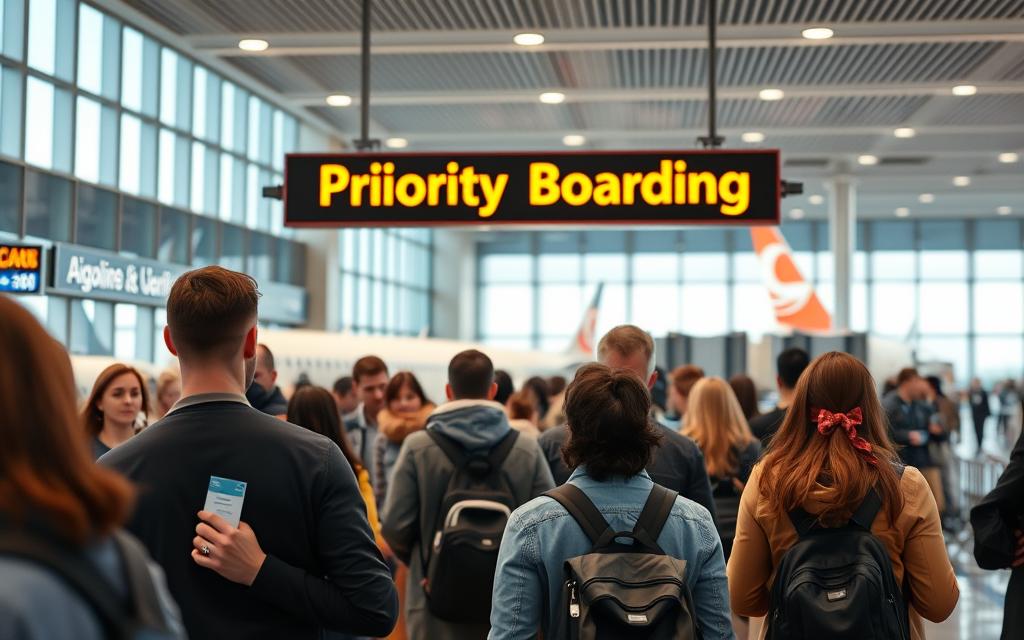
Priority boarding can make flying better by letting some passengers get on the plane early. It’s good to know who can get this and what perks come with it. This can help you decide if it’s a good idea to ask for it.
Who Qualifies for Priority Boarding?
Who gets priority boarding changes with each airline. Usually, the following people can get this special service:
- Passengers with elite status in frequent flyer programs
- Those in premium cabins, like business or first class
- Credit card holders of partnerships with certain airlines
- Families with young kids
Benefits of Priority Boarding
Priority boarding has many perks that make flying better. Some key benefits are:
- Choosing where your carry-on goes, so it’s easy to get to
- Less stress from boarding late
- A calmer boarding process with fewer people at the gate
- Getting settled faster, making your flight start smoother
Carry-On Luggage Screening
Efficient carry-on luggage screening is key for a smooth trip. Knowing how to prepare your bag saves time and follows the rules. A well-organized bag means a quicker check at security, letting you get on with your journey.
Organizing Your Bag for Quick Screening
Here are some tips for organizing your bag:
- Keep your liquids in a clear, quart-sized bag for easy access.
- Place electronics, such as laptops and tablets, at the top of your bag.
- Ensure travel documents are easily reachable.
These steps make your bag easy to screen. A tidy bag cuts down on delays and helps security do their job faster.
Prohibited Items in Carry-Ons
Knowing what you can’t bring in your carry-on is crucial. Make sure you know about banned items like:
- Liquids over 3.4 ounces (100 ml).
- Sharp objects like knives and scissors.
- Flammable items, including aerosols and fireworks.
This info helps you during security checks. It ensures your carry-on meets the rules, making your journey smoother.
Gate Announcements and Updates
Knowing about gate announcements is key to a smooth trip. Airports are busy places where things can change fast, especially when lots of people are traveling. By keeping an ear out for updates, you’ll know about any changes that might affect your flight.
Importance of Listening for Updates
It’s vital to listen for updates to avoid problems as you get ready to board. Airlines often make important announcements about your flight, like delays or gate changes. By paying attention, you can change your plans quickly and reduce stress.
Prep for Last-Minute Gate Changes
Gate changes can happen suddenly for many reasons, like airport traffic or operational needs. To handle these changes well, keep an eye on announcements and signs in the terminal. Make sure your phone is charged and use your airline’s app to stay updated on any changes.
Boarding Zones Explained
Knowing how airlines sort passengers into boarding zones makes flying smoother. These zones help organize boarding, making it easier for everyone. Each airline has its own way of doing this, so it’s good to know theirs. This knowledge helps avoid confusion and delays when it’s time to board.
How Airlines Define Boarding Zones
Airlines sort passengers into zones based on ticket class and frequent flyer status. First-class passengers go first, followed by premium economy, and then economy. Your boarding pass will show which zone you’re in, which is key for boarding at the right time.
Tips for Boarding Smoothly
Using smart boarding tips can make your trip better. Here are some important tips:
- Pay attention to boarding announcements. Make sure you’re ready when your zone is called.
- Have your things ready and easily accessible to avoid delays.
- Stand near the boarding area before your zone is called, but don’t block the gate.
- Stay calm when it’s your turn. Rushing can cause you to forget something.
Following these boarding tips helps you and others have a better experience. It makes boarding more efficient for everyone.
Maximizing Comfort During Your Flight
Traveling often means sitting for long hours. It’s key to pick the right clothes and items to make your flight better.
Choosing Comfortable Attire
Wear loose clothes to keep blood flowing well. Cotton or moisture-wicking fabrics help you stay cool and comfy. Stay away from tight belts or clothes that restrict movement.
Layering is a good idea because the cabin’s temperature changes. Use lightweight jackets or cardigans for warmth without the bulk.
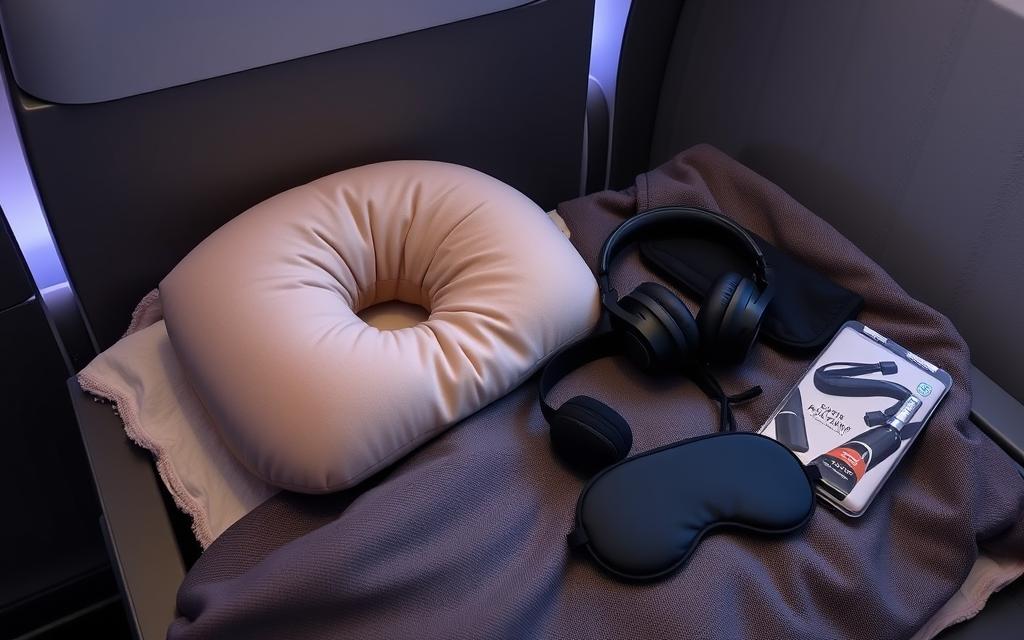
Bringing Travel Comfort Items
Think about bringing items to make your flight more enjoyable. A neck pillow supports your head and neck. A small blanket keeps you warm.
Compression socks are also great. They help with blood flow and ease leg discomfort. These items make flying better, helping you arrive feeling refreshed.
Conclusion
Getting ready for a flight means knowing key things, like baggage limits and security steps, before you board. Think about these things when planning your trip. This way, you can avoid stress that often comes with flying.
Knowing what happens at the airport makes your trip smoother. Arriving on time and understanding security checks can make a big difference. Being prepared helps you handle the airport better.
For a fun flight, prepare well and get used to the airport. Keep these tips in mind for a trip that goes smoothly to your destination.