Did you know over 60% of Americans have never left the U.S.? If you’re one of them, get ready for an adventure. Traveling abroad for the first time is thrilling yet a bit scary. To make it smoother, learning key travel tips is a must.
Start by getting your travel documents ready early. Then, learn about the culture of your destination. This will boost your confidence and make you more excited for your trip.
This guide is packed with tips to help you handle international travel. With these insights, you’ll know what to expect and how to enjoy your trip. Your first time traveling abroad will be unforgettable.
Key Takeaways
- Gather all necessary travel documents well in advance.
- Understand cultural differences to enhance your experience.
- Plan your itinerary to make the most of your trip.
- Stay informed about health and safety considerations.
- Learn basic phrases to help navigate language barriers.
Understanding Travel Documents
Having the right travel documents is key to a smooth trip abroad. Each document is crucial for a hassle-free journey. Make sure you know about passports, visas, and other documents you’ll need.
Importance of a Valid Passport
A valid passport is very important. Most countries want your passport to be good for at least six months after you arrive. If it’s not, you might not get in. Always check the rules for your destination.
Checking Visa Requirements
It’s vital to check visa needs before you go. Some places need you to get a visa before you arrive. Others let you get one when you get there. Make sure you know what your destination requires to avoid problems.
Additional Travel Documents
You might also need other important papers. Keep copies of any medicines you’ll take with you. Also, have emergency contact info ready, which is key in an emergency. Always make sure you have everything before you leave.
| Document | Purpose | Validity Requirements |
|---|---|---|
| Passport | Identification and travel | Valid for at least six months beyond travel date |
| Visa | Permission to enter specific countries | Varies by country; some require advance application |
| Medical Prescriptions | Proof for necessary medications | No specific requirements; carry as needed |
| Emergency Contacts | Reference for assistance | Keep updated with local contacts |
Planning Your Itinerary
Creating a good travel plan is key to a great trip. It helps you move around easily and enjoy your time more. You’ll also feel less stressed.
Researching Your Destination
Begin by learning all you can about your destination. Learn about the main sights, customs, food, and laws. This knowledge makes your trip better and keeps you from making mistakes.
Use travel blogs, official tourism sites, and forums for tips from other travelers. These resources are full of useful information.
Setting a Realistic Schedule
It’s important to plan your days wisely. Think about what you like and how many days you have. Try to balance seeing sights with relaxing to really get into the local culture.
Don’t pack too much into one day. This can make you tired instead of happy. Leave some time for surprises or just chilling out.
Budgeting for Activities
It’s crucial to stick to your budget while still having fun. Think about costs for attractions, getting around, and eating out. Make a list of things you must do and how much they’ll cost.
This helps you focus and avoid spending too much. Always save a bit extra for unexpected costs.
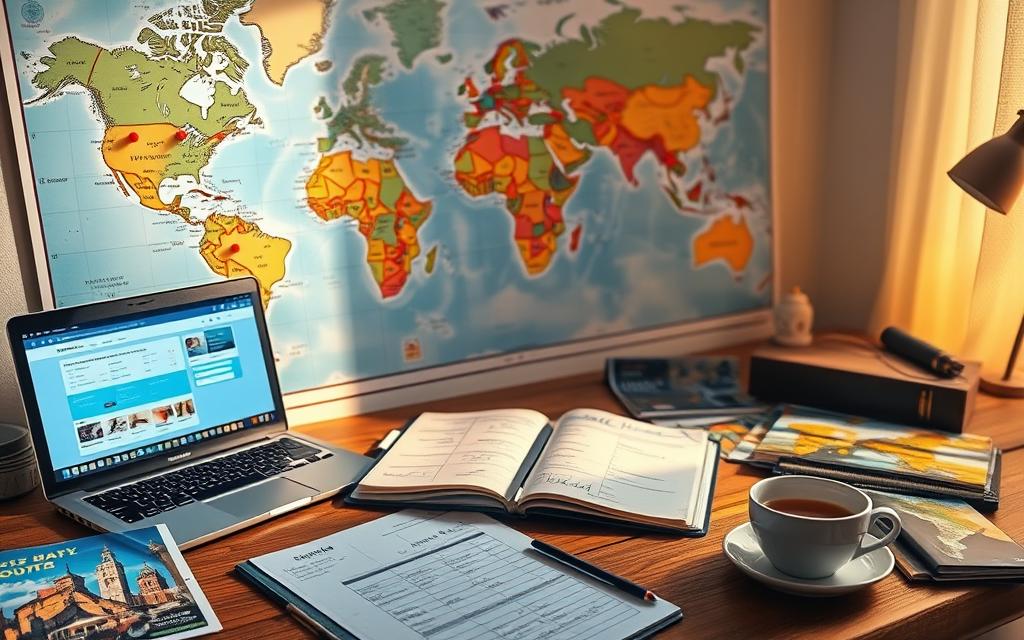
First Time International Travel: Key Preparations
Getting ready for your first trip abroad is exciting but requires careful planning. It’s important to focus on health and safety, get travel insurance, and keep emergency contacts handy. Knowing these steps can make your trip smoother and more enjoyable.
Health and Safety Considerations
Keeping safe while traveling is key. Look into health and safety tips for your destination. This includes getting the right shots and knowing how to stay safe with food. Being aware of local health rules can keep you healthy and let you enjoy your trip.
Travel Insurance Options
Travel insurance is a must for first-timers. It covers unexpected costs like emergency flights or lost bags. There are many plans to choose from, so pick the one that fits your trip best.
Emergency Contact Information
Make a list of emergency contacts before you go. Include local police, hospitals, and the U.S. embassy. Having these numbers ready can be a big help in an emergency.
Managing Currency and Payments
Traveling internationally means you need to plan your money well. You should know about currency exchange, using credit cards abroad, and keeping cash safe. This guide will help you make smart choices.
Understanding Currency Exchange
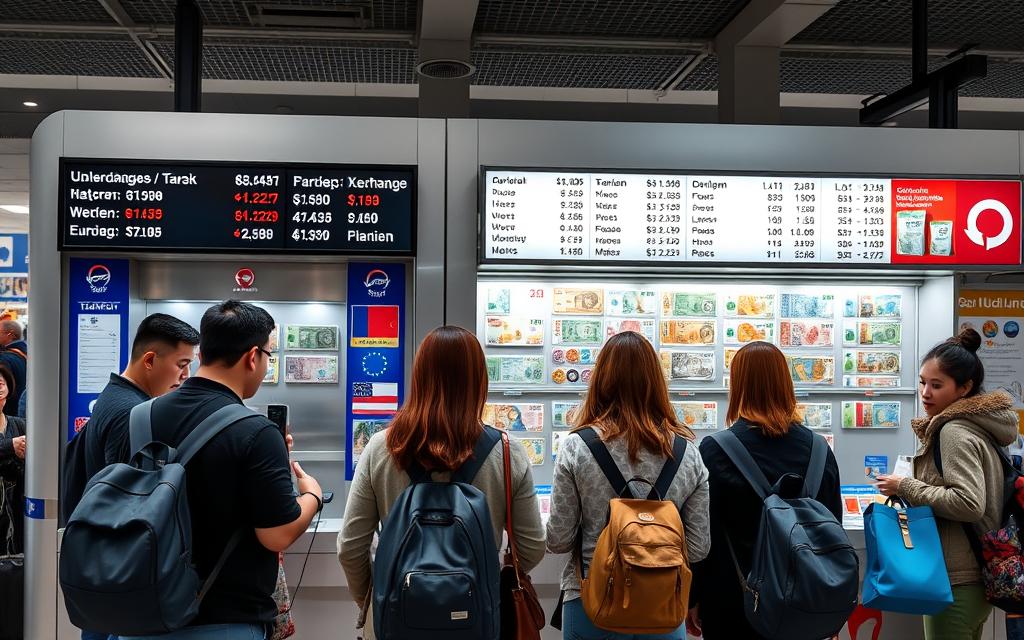
When you go to a new country, learn about the local money. Check the exchange rates and find good places to exchange money. Don’t exchange too much at airport booths because they charge more.
Look for better rates at local banks or special exchange offices instead.
Using Credit Cards Abroad
Using credit cards can make traveling easier and safer. Tell your bank you’re traveling to avoid problems with your card. Some cards don’t charge extra for foreign transactions, which saves money.
Make sure your card is accepted in your destination to avoid trouble.
Carrying Cash Safely
Even though cards are handy, some places only take cash. Bring enough local money and keep it safe. Use a money belt or something similar to hide your cash.
Only take out what you need to spend to stay safe. Keep some emergency cash somewhere else too.
| Method | Pros | Cons |
|---|---|---|
| Currency Exchange | Immediate cash for expenses | Potentially high fees |
| Credit Cards | Convenient and secure | May not be accepted everywhere |
| Carrying Cash | Necessary in cash-based economies | Risk of theft or loss |
Navigating Language Barriers
Traveling internationally can be tough when you don’t speak the local language. You can make things easier by learning basic phrases. This way, you can communicate better and enjoy the culture more.
Learning Basic Phrases
Learning a few key phrases can really help. You don’t have to speak like a native, but knowing simple things like greetings and basic questions is great. Here are some phrases to get you started:
- Hello
- Thank you
- Please
- Excuse me
- Do you speak English?
These phrases show respect for the culture and make talking to people easier.
Utilizing Translation Apps
Along with learning phrases, translation apps can be a big help. They translate in real time for things like ordering food or asking for directions. Some top choices are Google Translate and iTranslate, which offer voice and text translations.
| Phrase | Translation |
|---|---|
| Hello | Bonjour / Hola |
| Thank you | Merci / Gracias |
| Please | S’il vous plaît / Por favor |
| Excuse me | Excusez-moi / Perdone |
| Do you speak English? | Parlez-vous anglais ? / ¿Habla inglés? |
Booking International Flights
Booking international flights requires choosing between direct and connecting flights. Each option has its pros and cons. Knowing these can help you make a better choice.
Choosing Direct vs. Connecting Flights
Direct flights are quicker, skipping layovers and their uncertainties. Connecting flights might be cheaper and offer more flexibility. Consider these points:
- Time Efficiency: Direct flights save time, getting you to your destination faster.
- Cost Comparison: Connecting flights can be cheaper, appealing to those on a budget.
- Comfort Level: Think about layover time, airport comforts, and possible delays.
Optimal Times to Book Flights
Booking flights at the right time can save you money. It’s smart to book at least 60 days early for international trips. Use fare comparison apps to watch prices and act on changes. Here’s a simple booking timeline:
| Booking Timeframe | Action Steps |
|---|---|
| 3-6 Months Ahead | Start researching and set up fare alerts. |
| 2 Months Ahead | Book your flights to get the best prices. |
| 1 Month Ahead | Check your flight details and get ready for your trip. |
Packing Essentials for Your Trip
Packing right is key for your first trip abroad. It makes your journey smoother and less stressful. Being well-prepared and organized is crucial.
Creating a Packing List
Make a packing list to make sure you don’t forget anything important. Begin by sorting items into groups:
- Clothing
- Toiletries
- Electronic devices
- Travel documents
- Medications
Think about the weather and activities you’ll do at your destination. This way, you pack only what you need and avoid taking too much.
Managing Luggage Weight and Size
Learn about your airline’s rules for luggage size and weight to avoid extra fees. Use packing cubes to make the most of your bag’s space. They help you stay organized and follow the rules. Here’s a simple guide for packing smart:
| Item | Tip |
|---|---|
| Clothing | Roll instead of fold to save space |
| Toiletries | Use travel-sized containers to reduce weight |
| Electronics | Pack only the chargers you need |
| Documents | Keep them in a separate, accessible pocket |
| Medications | Store in original containers for clarity |
Staying Connected While Traveling
Staying connected while traveling can make your trip better and solve problems easily. You might be exploring a new city or just keeping in touch with family. Knowing how to manage your communication is key.
International Phone Plans
Before you start your trip, look into international phone plans. Many phone companies have special deals for using your phone in other countries. Find plans that offer data, talk, and text to stay connected without breaking the bank.
Using Wi-Fi and Data Services
Wi-Fi is a great way to stay in touch while traveling. Many places like hotels, cafes, and public spots offer free Wi-Fi. This lets you talk to family and friends or use travel apps. Download important maps and guides offline before you go, as they can be very useful.
| Service Type | Pros | Cons |
|---|---|---|
| International Phone Plans | – Predictable costs – High data speeds |
– May not cover all countries – Could require upfront payment |
| Using Wi-Fi | – Often free – No additional charges |
– Availability varies – Security risks |
| Local SIM Cards | – Lower rates for local calls – Flexibility |
– Need to switch SIM – May lose home number |
Plan ahead with international phone plans and use Wi-Fi to make sure your trip is smooth and connected.
Conclusion
First time international travel is an exciting chance that needs good planning and smart research. Knowing about travel documents, managing money, and dealing with language barriers can make your trip better. These tips will help you have a smoother and more fun journey.
When planning your trip, think about places like Toronto or Barcelona. Being ready lets you explore with confidence. Every little thing you do, like checking visas or making a budget, helps make your trip a success. With the right prep, your first trip abroad can be an amazing experience.
In conclusion, use the important tips given to make your travels rewarding and worry-free. The world is full of amazing things to see, so enjoy your first international trip and start your adventure with excitement!