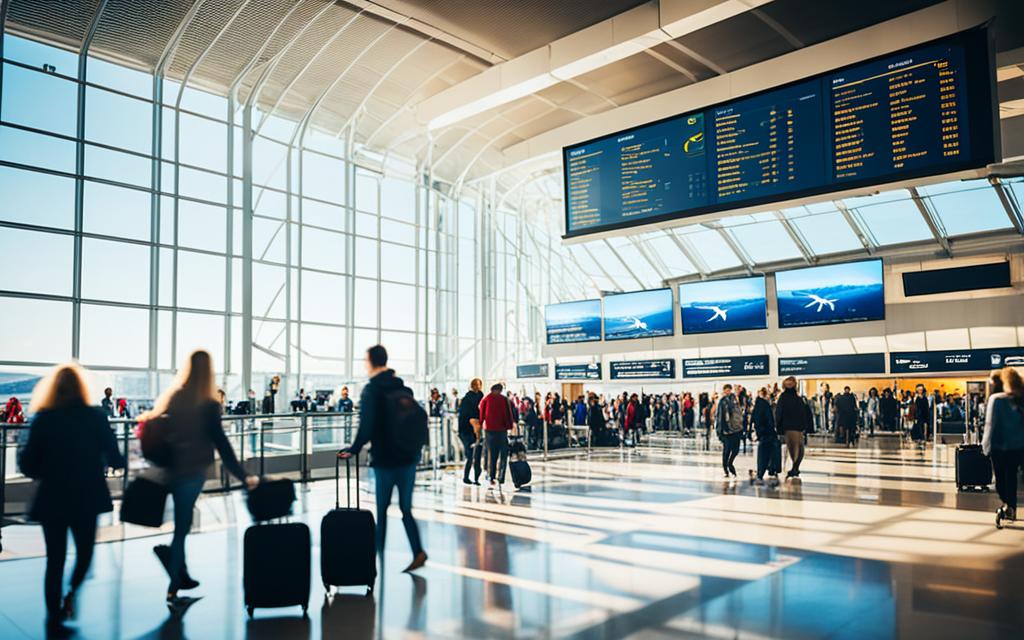
Imagine stepping into an airport for the first time. You’re hit with the sounds of announcements, the smell of coffee, and the sight of people rushing everywhere. It’s a lot to take in. But, with some tips and knowledge, you can make going through the airport easier.
Many airports have similar layouts. This means you can follow steps that work well for everyone. From checking in to getting through security, you can make the process smoother. By learning these steps, you’ll find going through the airport less stressful and more enjoyable.
Key Takeaways
- Understand the airport layout to reduce anxiety.
- Arrive early to allow for unexpected delays.
- Choose online check-in for convenience.
- Be prepared for TSA screening requirements.
- Learn about baggage options to avoid extra fees.
- Mastering the process can enhance your airport experience.
Understanding the Airport Layout
Knowing how an airport is laid out makes traveling easier. Airports have a standard design with many terminals for different airlines. Learning about these can help you move around without stress.
Familiarizing Yourself with Airport Terminals
It’s important to know which terminal your flight leaves from. For example, at Chicago O’Hare International Airport, Terminal 1 is mainly for United Airlines. Terminal 5 is for international flights. Knowing this helps avoid getting lost when you arrive.
Emergency Exits and Navigation Aids
Knowing where emergency exits and important spots are makes traveling smoother. Look for signs that show exits and places like restrooms and gates. Interactive kiosks also give real-time info, helping you understand the airport better. Learning about these can greatly improve your journey through the terminal.
Tips for a Stress-Free Check-In Process
Your travel day starts with check-in. Making this step smooth can set the tone for your trip. Here are some tips to help you check in without stress.
Arriving on Time: How Early Should You Be?
Being on time at the airport reduces stress. Airlines recommend arriving two hours early for domestic flights and three hours for international ones. This extra time covers parking and getting to the security check.
If you’re checking bags, add more time to avoid rushing.
Online vs. In-Person Check-In
Deciding between online and in-person check-in affects your airport visit. Online check-in opens 24 hours before your flight, letting you get your boarding pass early. It’s great if you’re not checking bags, making your airport entry faster.
However, in-person check-in is needed if you have luggage or need help. Think about what you need for your trip to choose the best option.
Going Through the Airport: Security Screening Made Easy
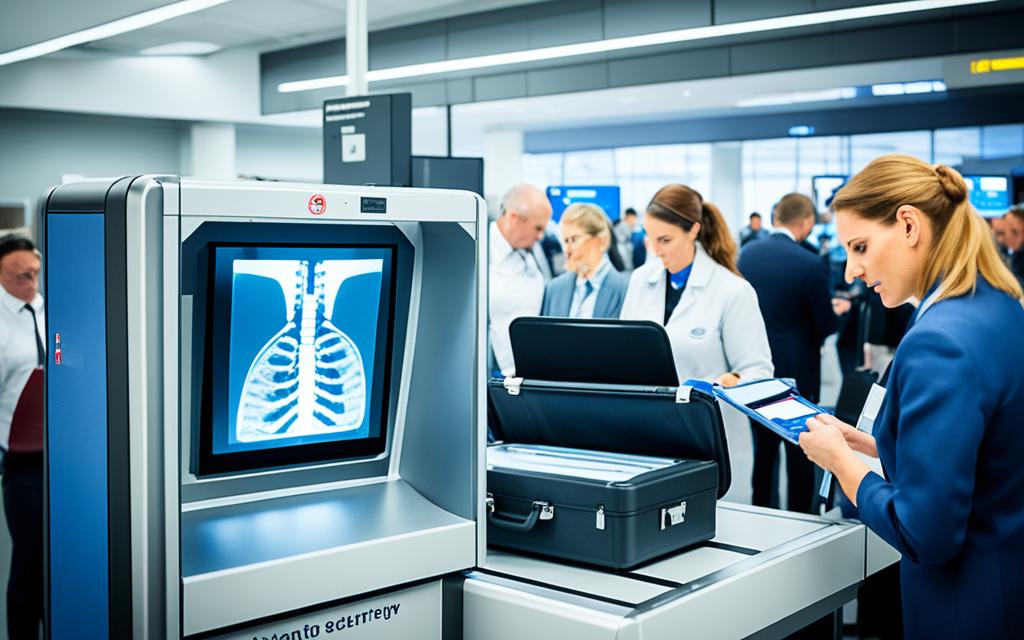
Going through airport security can feel overwhelming, but knowing what to expect can help. Understanding the TSA screening process can make things smoother. This way, you can prepare better and have a smoother experience.
What to Expect at TSA Screening
When you get to the TSA checkpoint, have your boarding pass and ID ready. Put your things in bins for scanning. This includes your carry-on items, shoes, belts, and jackets. You’ll need to take out laptops, tablets, and liquids for separate screening.
Prohibited Items and Packing Tips
Knowing what items are not allowed can save you from delays at the TSA. Common things you can’t bring include:
- Large liquids over 3.4 ounces
- Sharp objects, like knives and scissors
- Guns and explosives
To make packing easier, put liquids in a quart-sized bag. This makes them easy to check. Being organized helps reduce stress and speeds up the process.
Benefits of TSA Precheck and Global Entry
Joining TSA Precheck or Global Entry has big perks. These programs give you faster security checks with special lanes. You can keep your shoes, belt, and light jacket on. Your carry-on bag usually doesn’t get checked, making your trip better.
TSA Precheck is available at many U.S. airports, great for regular travelers. Global Entry adds more benefits for international trips, combining customs and TSA checks for a smoother journey.
Baggage Management and Handling
Getting ready for your trip means managing your bags well for a smooth airport trip. You need to decide between checked bags and carry-on luggage. Think about what you need and like when choosing.
Checked Bags vs. Carry-On: What’s Best for You?
When picking between checked and carry-on bags, consider these points:
- Convenience: Carry-on bags are easy to reach during the flight but have size and weight limits.
- Packing Comfort: Checked bags offer more space for your items but can be harder to get after the flight.
- Travel Duration: For long trips, checked bags are often needed. For short trips, a carry-on might be better.
Understanding Baggage Fees and Policies
Knowing airline baggage rules can save you money and avoid surprises at the airport. Airlines charge different fees for checked bags, depending on the ticket type and where you’re going. Here’s what to remember:
| Airline | Checked Bag Fee | Carry-On Fee |
|---|---|---|
| American Airlines | $30 for the first bag | Free |
| Delta Airlines | $30 for the first bag | Free |
| Southwest Airlines | Free for the first two bags | Free |
| Spirit Airlines | $65 for the first bag | $55 |
Looking at these policies helps you avoid surprise fees and pack right for your trip.
Conclusion
Planning well is key to a smooth airport experience. Knowing the airport layout helps you move easily through terminals. This way, you can quickly find your check-in and boarding gates.
Efficient check-in and a smart approach to security screening make travel stress-free. Managing your luggage well, whether it’s checked or carry-on, is crucial. Knowing the rules about baggage helps avoid unexpected fees, letting you enjoy your trip more.
Using these tips can make your airport journey enjoyable. A little preparation can greatly improve your airport experience. It sets the stage for unforgettable adventures ahead.