Have you ever dreamed of strolling through the charming streets of Rome, indulging in mouthwatering pasta in Florence, or gliding along the canals of Venice? Italy is a country that captivates the hearts of millions with its rich history, vibrant culture, and unparalleled beauty. Whether you’re an art enthusiast, a food lover, or simply seeking an unforgettable adventure, Italy offers a little something for everyone. But as a first-time traveler to Italy, you may find yourself overwhelmed with choices and unsure of where to start. That’s why we’re here to guide you through this exciting journey and provide you with invaluable tips that will make your experience unforgettable. For more detailed advice and expert insights, make sure to visit our comprehensive Travel Tips section, where you’ll find everything you need to plan the perfect Italian getaway.
When to Visit Italy: Best Seasons for Sightseeing
Italy is a stunning country with diverse landscapes and rich cultural heritage, making it a top destination for travelers worldwide. When planning your trip, it’s crucial to choose the right time to visit, considering the best seasons for sightseeing and exploring this beautiful country.
The weather and tourist crowds play a significant role in determining the ideal time to visit Italy. The peak season in Italy typically falls during the summer months of July and August when the weather is warm and sunny. During this time, popular tourist destinations like Rome, Florence, and Venice are bustling with visitors from around the world. However, the high season also means longer queues, crowded attractions, and higher prices for accommodations.
If you prefer to avoid the crowds and enjoy a more immersive experience, consider visiting Italy during the off-peak season. Winter, from December to February, offers a quieter atmosphere, especially in major cities, and allows you to explore popular landmarks with fewer tourists. The rates for hotels and airfare are also lower during this time, making it a budget-friendly option.
Spring (April to June) and fall (September to October) are considered the best seasons for sightseeing in Italy. The weather during these months is pleasant, with fewer tourists compared to the peak season. The landscapes come alive with vibrant colors, especially in Tuscany and the Amalfi Coast, making it an excellent time for outdoor activities and exploring the countryside.
Here’s a breakdown of the different seasons in Italy:
| Season | Weather | Crowds | Highlights |
|---|---|---|---|
| Spring (April to June) | Mild temperatures and occasional rain | Relatively fewer tourists | Blooming landscapes, outdoor festivals |
| Summer (July and August) | Hot and sunny | Peak season with high tourist numbers | Beach vacations, outdoor concerts |
| Fall (September to October) | Mild temperatures, occasional rain | Relatively fewer tourists | Vibrant autumn foliage, wine festivals |
| Winter (December to February) | Colder temperatures, occasional snow | Lower tourist numbers | Festive celebrations, skiing in the Alps |
Ultimately, the best time to visit Italy depends on your personal preferences and the activities you wish to indulge in. Whether you’re exploring ancient ruins in Rome or enjoying a serene gondola ride in Venice, Italy will captivate you with its beauty and charm regardless of the season.
Planning Tip:
- Consider shoulder seasons like spring and fall for a balance of good weather and fewer crowds.
- If you’re a beach lover, summer is the perfect time to experience the stunning coastal areas of Italy.
- Winter is a great option for budget travelers and those seeking a more intimate experience in popular cities.
Must-See Cities: Rome, Florence, and Venice
Rome, Florence, and Venice are the top cities in Italy that you must visit on your first trip to this enchanting country. Each city offers a unique blend of history, art, and culture that will leave you mesmerized. Let’s explore the highlights of these magnificent cities:
Rome: The Eternal City with Iconic Attractions
In Rome, you’ll encounter a perfect fusion of ancient history and modern charm. Marvel at the grandeur of the Colosseum, where gladiatorial battles once took place. Admire the architectural marvels of the Pantheon and the rich artistry of Vatican City, home to the awe-inspiring St. Peter’s Basilica and the Sistine Chapel. Immerse yourself in the captivating atmosphere of Rome’s bustling streets, lined with charming cafes and vibrant markets.
Florence: A Renaissance Art Haven
Journey to Florence to experience the artistic legacy of the Renaissance. Visit the world-renowned Uffizi Gallery, where masterpieces by artists like Botticelli, Michelangelo, and Leonardo da Vinci adorn the walls. Stroll across the iconic Ponte Vecchio, a medieval stone bridge brimming with jewelry shops. Florence’s magnificent Duomo, with its intricate facade and breathtaking dome, is a must-see attraction. Lose yourself in the winding streets of the city, filled with hidden gems waiting to be discovered.
Venice: The City of Canals and Romantic Ambiance
Venice, famous for its picturesque canals and gondola rides, is a city like no other. Explore the enchanting streets and bridges, and immerse yourself in the Venetian culture. Visit St. Mark’s Square, the heart of Venice, and admire the stunning St. Mark’s Basilica with its Byzantine architecture. Take a memorable gondola ride along the serene canals, and witness the breathtaking beauty of the Rialto Bridge. Venice’s rich history and extraordinary charm will captivate your heart.
These top cities in Italy offer an abundance of attractions and experiences that cater to every traveler’s taste. Whether you’re a history enthusiast, an art lover, or seeking a romantic getaway, Rome, Florence, and Venice will fulfill your desires and create lifelong memories.
| City | Key Attractions |
|---|---|
| Rome |
|
| Florence |
|
| Venice |
|
Exploring the Amalfi Coast
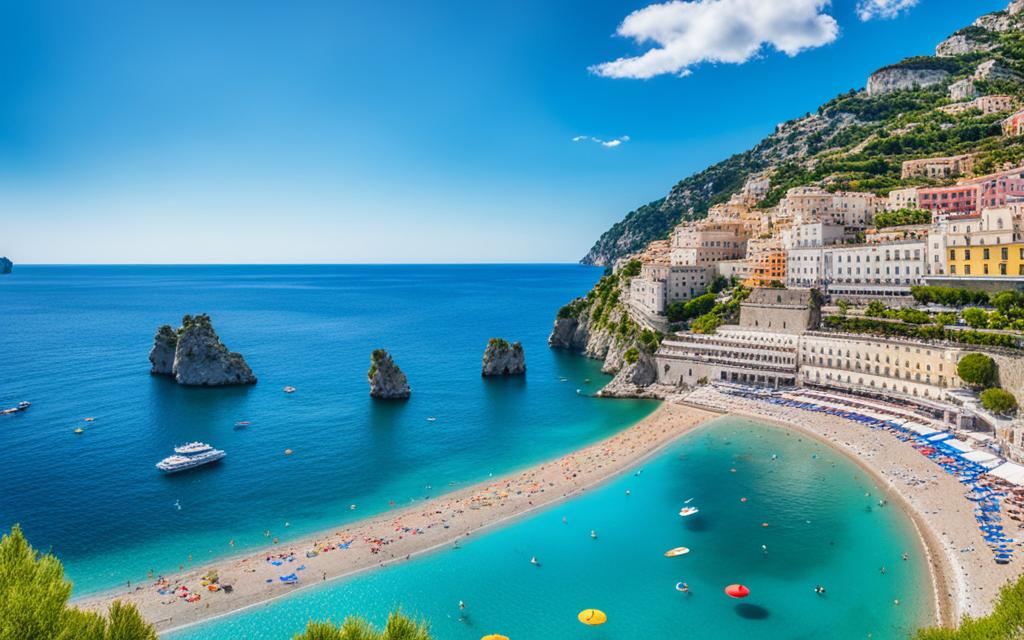
The Amalfi Coast is a breathtaking coastal region in southern Italy that offers stunning views, charming towns, and beautiful beaches. Immerse yourself in the vibrant atmosphere and picturesque landscapes as you explore the towns along the coast.
Positano: Colorful Houses and Coastal Charm
One of the most iconic towns on the Amalfi Coast, Positano is renowned for its colorful houses cascading down the cliffs. Stroll through the narrow streets lined with boutiques and artisan shops, and take in the panoramic views of the sparkling blue sea. Don’t forget to visit the Spiaggia Grande, a vibrant beach where you can relax and soak up the sun.
Amalfi: Historic Cathedral and Mediterranean Flair
Amalfi is a town rich in history and Mediterranean charm. Explore the magnificent Amalfi Cathedral, an architectural gem dating back to the 9th century. Wander through the maze-like streets, filled with picturesque alleys and hidden courtyards. Indulge in the local cuisine at one of the traditional trattorias and savor the flavors of the Amalfi Coast.
Ravello: Gardens and Panoramic Views
Perched high above the coast, Ravello offers a tranquil escape with its peaceful gardens and breathtaking views. Visit the famous Villa Rufolo and Villa Cimbrone, both known for their exquisite gardens and stunning vistas. Enjoy a leisurely walk through the lush greenery while taking in the panoramic views of the coastline below.
No visit to the Amalfi Coast is complete without spending time on its beautiful beaches. From secluded coves to vibrant waterfronts, the Amalfi Coast offers a variety of beach options to suit every preference. Relax on the golden sands, swim in the crystal-clear waters, or simply bask in the Mediterranean sunshine.
| Town | Description |
|---|---|
| Positano | Colorful houses cascading down the cliffs, vibrant atmosphere |
| Amalfi | Historic cathedral, picturesque streets, Mediterranean flair |
| Ravello | Tranquil gardens, panoramic views, peaceful ambiance |
Experience the magic of the Amalfi Coast towns, where history, culture, and natural beauty intertwine to create an unforgettable destination.
Transportation in Italy: Trains, Ferries, and Local Transportation
Getting around Italy is a breeze with its excellent transportation options. Whether you’re traveling between major cities, exploring the coastal regions, or navigating city centers, there are convenient and efficient modes of transport to suit your needs.
Train Travel in Italy
Trains are a popular choice for traveling between major cities in Italy. Not only are they efficient and comfortable, but they also offer breathtaking views of the picturesque Italian countryside. The extensive rail network connects cities across the country, allowing you to easily explore different regions. From the iconic high-speed trains, such as the Frecciarossa and Italo, to regional trains, there are various ticket options to fit your budget and travel preferences.

| Advantages of Train Travel in Italy | Considerations for Train Travel in Italy |
|---|---|
|
|
Ferry to Italy
If you’re looking to explore Italy’s coastal regions or neighboring countries, ferries are an excellent option. They provide a scenic and leisurely way to travel, offering stunning views of the coastline and the opportunity to soak up the Mediterranean charm. Ferries connect Italy with destinations such as Greece, Croatia, and Malta, allowing you to embark on exciting island-hopping adventures. Whether you’re looking to relax on the deck or explore the onboard amenities, a ferry journey is a memorable experience.
| Advantages of Taking a Ferry to Italy | Considerations for Taking a Ferry to Italy |
|---|---|
|
|
Local Transportation in Italy
Once you’ve arrived in your destination city, there are plenty of options for local transportation to help you navigate and explore. Italy’s cities are well-connected with public buses and trams, providing convenient and affordable ways to get around. Many historic city centers are pedestrian-friendly, allowing you to wander through charming streets and stumble upon hidden gems. Walking is a fantastic way to soak in the local atmosphere and discover the unique character of each city.
Consider purchasing tickets or passes in advance to save time and money. Public transportation systems often offer day passes or multi-journey tickets that can be used across different modes of transport. This allows you to seamlessly explore the city without worrying about individual ticket purchases.
When using public transportation, be mindful of peak travel hours, as buses and trams can get crowded. Keep an eye on your belongings and be aware of any pickpocketing risks, particularly in popular tourist areas. By staying vigilant and following basic safety precautions, you can navigate Italy’s local transportation systems with ease.
Italian Cuisine and Dining Etiquette
Italy is renowned for its delicious cuisine and dining culture. When dining in Italy, it’s important to embrace the local customs and etiquette to fully enjoy the experience. Here are some tips to enhance your dining experience in Italy:
1. Greet with Politeness
When entering an Italian restaurant or trattoria, greet the staff with a friendly “buongiorno” (good morning) or “buonasera” (good evening) to show respect. Italians value politeness and making a good first impression sets the tone for a pleasant dining experience.
2. Savor the Meal
In Italy, dining is a leisurely affair meant to be enjoyed and savored. Prepare for a multi-course meal that typically includes antipasti (appetizers), primi (first courses), secondi (main courses), contorni (side dishes), and dolci (desserts). Take your time, engage in conversation, and appreciate each dish as it is served.
3. Try Famous Italian Dishes
Italy is famous for its diverse culinary traditions, and trying the iconic dishes is a must. Indulge in the rich flavors of pasta carbonara, made with eggs, bacon, and cheese; savor the simplicity of a classic pizza margherita, topped with tomato sauce, mozzarella, and fresh basil; and treat yourself to the creamy delight of authentic Italian gelato.
4. Pair with Italian Wine
No Italian meal is complete without a glass of fine Italian wine. Italy is renowned for its winemaking heritage, offering a wide variety of reds, whites, and sparkling wines. Pair your meal with a glass of Chianti, Barolo, or Prosecco to elevate your dining experience.
5. Embrace Gelato Culture
When in Italy, indulging in gelato is a must. Gelato is Italy’s version of ice cream, known for its creamy texture and intense flavors. From classic options like chocolate and vanilla to unique combinations like pistachio and stracciatella, exploring the gelato shops in Italy is an essential part of your culinary journey.
6. Respectful Tipping
In Italy, tipping is not as common as in some other countries. However, leaving a small gratuity as a token of appreciation is always welcome. It’s customary to round up the bill or leave a few euros as a gesture of thanks for the service provided.
By embracing Italian dining etiquette and immersing yourself in the rich culinary traditions, you’ll have a truly memorable experience that highlights the vibrant flavors and cultural heritage of Italy.
Italy Packing List and Essential Items
When preparing for your trip to Italy, it’s essential to pack the right items to ensure a comfortable and enjoyable experience. Here is a list of must-have essentials:
1. Comfortable walking shoes: Italy offers plenty of opportunities for exploring cities and towns on foot, so make sure to pack sturdy and comfortable shoes.
2. Lightweight clothing: Depending on the time of year, pack lightweight and breathable clothes for warmer months and layered clothing for cooler months.
3. Sun protection: Italy boasts beautiful sunny days, so be sure to pack sunscreen, sunglasses, and a hat to protect yourself from the sun’s rays.
4. Adapter plugs: Italy uses different electrical outlets, so don’t forget to pack adapter plugs to charge your electronic devices.
5. Travel guidebook or map: To navigate the cities and attractions smoothly, bring along a travel guidebook or a map that will be your go-to resource.
6. Lightweight daypack: A lightweight daypack is perfect for carrying essentials during your day trips and exploring the beautiful sights.
7. Travel insurance: It’s important to have travel insurance to protect yourself against unforeseen events or emergencies during your trip.
8. Copies of important documents: Make copies of essential documents such as your passport and travel itinerary to have handy in case of any mishaps.
With these essential items, you’ll be well-prepared to enjoy your trip to Italy to the fullest!